

This post contains affiliate links. I may earn a commission if you purchase through these links, at no additional cost to you. As an Amazon Associate I earn from qualifying purchases.
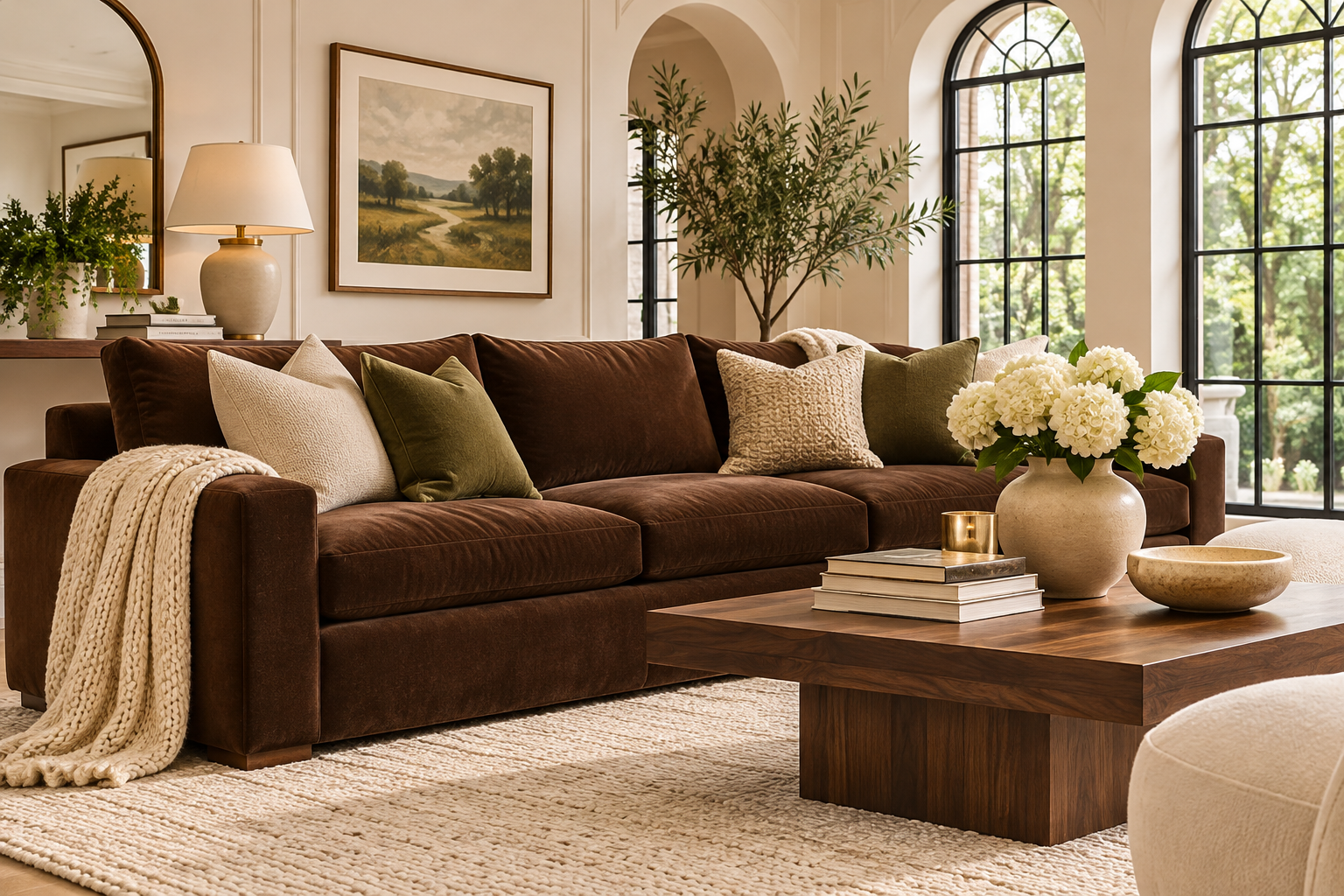
Wondering what colors go with a brown couch without making your living room feel dark, dated, or too beige?
The right colors can completely change how a brown sofa looks. A chocolate couch can feel lighter against an ivory rug, while cognac leather looks beautiful with muted blue or olive green. Even an older brown sofa can feel more contemporary with the right surrounding colors and textures.
The key is working with your couch’s particular shade of brown rather than decorating around brown as though it’s one color.
The best colors to pair with a brown couch are cream, ivory, warm beige, sage green, olive, muted blue, terracotta, soft greige, and deep burgundy. For a brighter room, choose lighter neutrals. For an earthy look, try muted greens. For a more dramatic space, use richer accents while keeping enough light contrast.
Here are ten combinations that work—and how to choose the right one for your living room.
How to Choose What Colors Go With a Brown Couch
Before buying anything, look at three things: your couch’s undertone, the colors already in the room, and how light or dark you want the finished space to feel.
A cognac leather sofa has more orange warmth than a chocolate-brown fabric couch. An espresso sofa can appear almost black in low light, while a caramel couch may already provide plenty of warmth.
Those differences matter more than choosing a color simply because it looks beautiful in someone else’s living room.
Find the Best Colors for Your Shade of Brown
| Your couch | Room conditions | Colors to try | Why they work |
|---|---|---|---|
| Dark chocolate brown | Small or dim room | Ivory, oatmeal, sage | Lighter surroundings create contrast |
| Espresso brown | Light walls and wood floors | Cream, olive, warm greige | Adds warmth without losing definition |
| Cognac leather | Warm oak flooring | Cream, dusty blue, muted olive | Balances the leather’s orange undertones |
| Caramel brown | Beige walls | Ivory, chocolate, olive | Adds needed depth to a warm room |
| Cool taupe-brown | Gray floors | Warm greige, ivory, muted green | Connects cooler and warmer finishes |
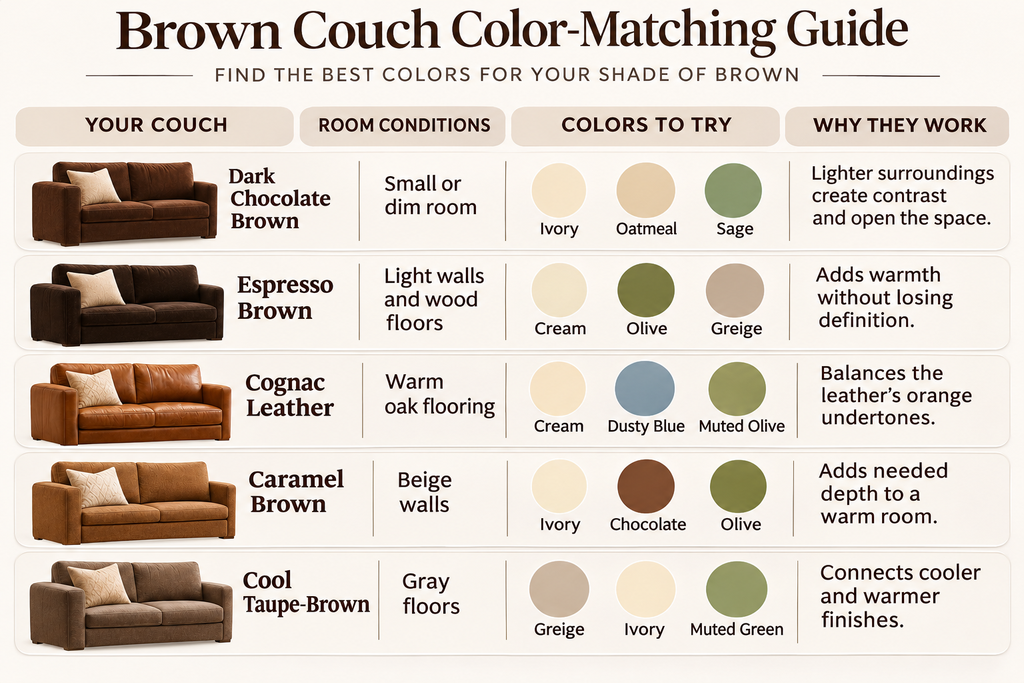
These are starting points, not rigid rules. The same color can look different beside warm oak floors, cool gray vinyl, or creamy beige walls.
For example, if your brown couch sits on gray flooring, a warm ivory-and-taupe rug can help connect the two. If your floors are orange-toned wood, introducing more orange through pillows and artwork may make the room feel overly warm.
When choosing fabrics or paint, compare samples beside the couch and floor in daylight and under your usual evening lighting.
A useful decorating rule: Choose one main neutral for the larger surfaces, one accent color, and a few coordinating textures. You don’t need five different accent colors to make a brown sofa look beautiful.
10 Beautiful Color Combinations for a Brown Couch
1. Brown + Cream and Ivory
Best for: Dark chocolate and espresso couches, especially in rooms that need more light contrast.
Cream and ivory are among the easiest colors to use with a brown sofa because they create contrast without introducing another strong color.
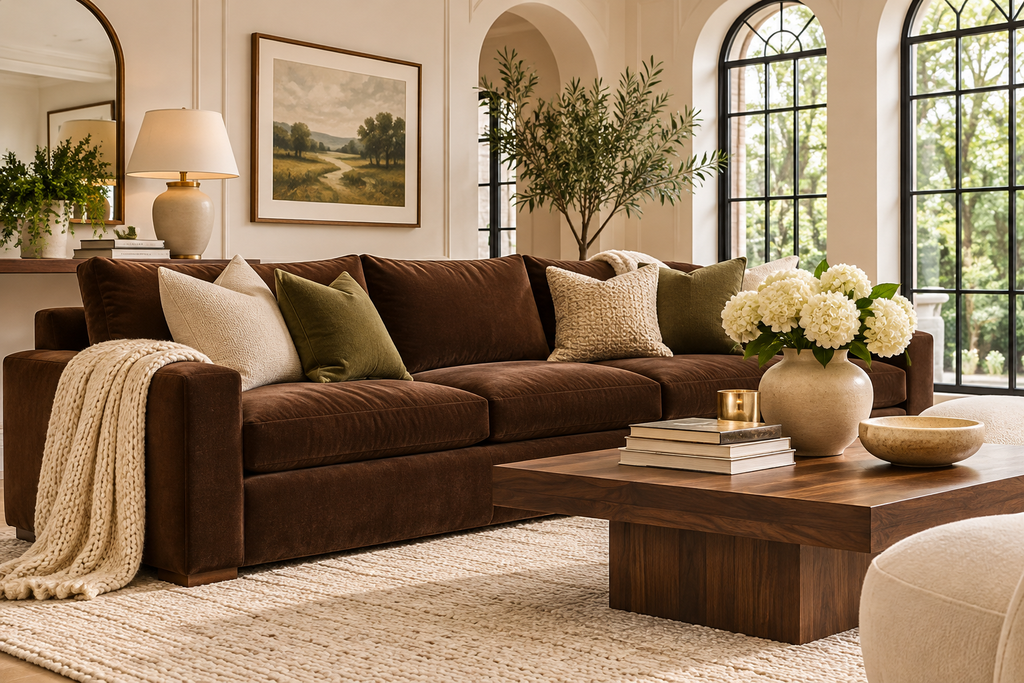
A chocolate-brown couch against cream walls and a generous ivory rug feels noticeably lighter than the same sofa surrounded by dark furniture and medium-brown flooring.
For a refined combination, try:
- A warm ivory area rug beneath the seating area
- Two textured cream pillows
- Soft white or warm-cream walls
- A natural oak or walnut coffee table
- One muted accent color, such as olive or taupe
Style Pick: A Textured Ivory Area Rug
For a dark brown sofa, I’d prioritize a warm ivory rug with visible texture or a subtle tonal pattern. It creates a lighter foundation without looking stark.
Before buying, check the rug’s dimensions, fiber content, pile height, and cleaning instructions. If the room gets heavy everyday use, a softly patterned or verified easy-care option may be more practical than a solid pale rug.
The 9’6″ × 13′ size shown here is best suited to a generously sized seating area. Check the available sizes and measure your furniture layout before choosing the right fit for your room.

For a closer comparison of rug materials, patterns, and colors, explore The Best Neutral Area Rugs for Living Rooms.
2. Brown + Sage Green
Best for: Chocolate, medium-brown, and some cognac sofas when you want a soft, natural palette.
Sage green introduces color without making a brown couch feel overly decorated.
The most versatile shades are muted rather than bright, with enough gray or warmth to sit comfortably beside the sofa.
Try a chocolate couch with two sage pillows, a warm ivory rug, walnut furniture, and artwork that repeats a little of the green.
Sage is particularly attractive when you want a lighter, more relaxed atmosphere than a dark green would create.
However, not all sage fabrics have the same undertone. Some lean noticeably blue-gray. With very warm cognac leather, compare the green directly against the upholstery before purchasing.
If the combination looks disconnected, choose a warmer sage or add an ivory textile between the two colors.
3. Brown + Warm Beige and Oatmeal
Best for: Medium-brown and caramel sofas in warm, layered neutral living rooms.
Brown and beige work well together, but the trick is avoiding several large surfaces in nearly identical shades.
If your sofa is caramel brown, a slightly lighter oatmeal rug can create separation. Add cream curtains, a deeper chocolate accent, and wood furniture for contrast.
Texture becomes particularly important in this combination.
A smooth leather couch can look beautiful with a woven rug and soft linen pillows. A fabric sofa may benefit from a contrasting ceramic lamp or polished wood table.
Cream versus beige: Cream usually creates a stronger light/dark contrast against chocolate upholstery. Beige gives a softer, more tonal effect.
If your room already has beige walls, I’d choose a rug that’s either clearly lighter, noticeably deeper, or patterned rather than trying to match the walls exactly.
4. Brown + Dusty Blue
Best for: Cognac leather and reddish-brown sofas that need a cooler accent.
Muted blue is one of the most interesting colors to pair with warm brown leather.
Because cognac often has orange undertones, dusty blue can provide contrast without looking overly colorful.
Choose a softened blue-gray, slate blue, or muted denim shade rather than bright royal blue.
For example, pair a cognac leather sofa with two dusty blue pillows, an ivory rug, warm-white walls, and a walnut coffee table.
Then repeat a little blue in artwork or a small decorative object.
That repetition is enough to make the color feel intentional.
Avoid adding several competing cool colors. Dusty blue works best when the rest of the palette remains fairly simple.
5. Brown + Olive Green
Best for: Chocolate, espresso, and cognac couches in earthy or slightly moody living rooms.
Olive green creates a deeper, richer look than sage.
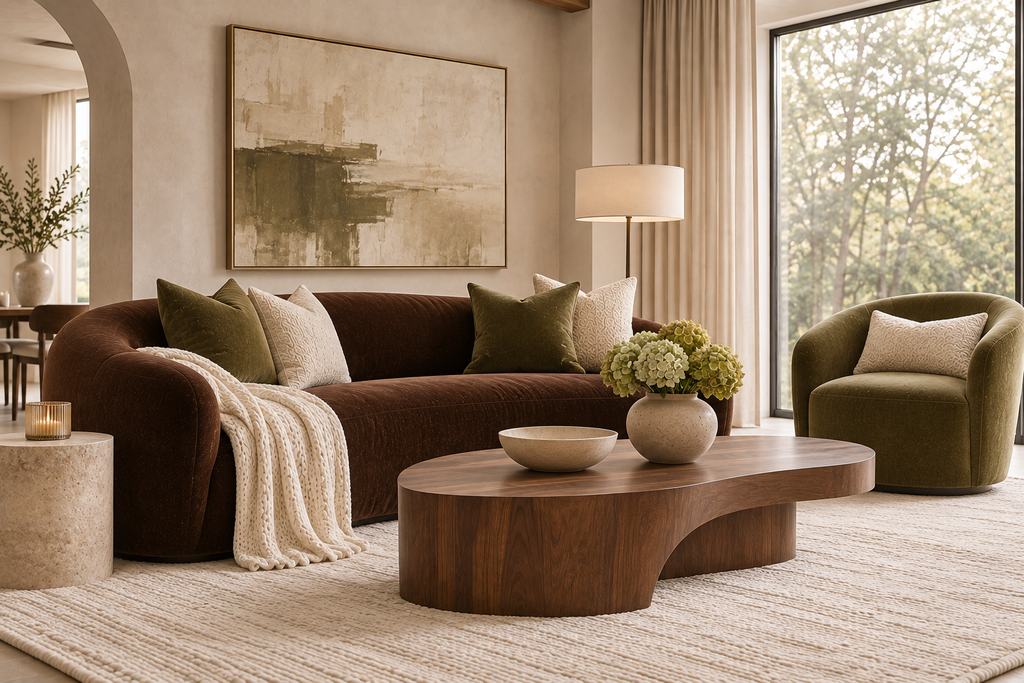
It’s particularly beautiful beside dark brown upholstery, walnut furniture, and understated aged-brass details.
Try an espresso sofa with muted olive pillows, a cream rug, warm neutral walls, and a walnut table.
Sage or olive—which should you choose?
Choose sage when you want a softer, airier living room. Choose olive when you want more depth and contrast.
With an especially dark couch in a dim room, I’d use olive only in smaller accents and keep the rug and curtains light.
Style Pick: Muted Olive Pillow Covers
Look for an earthy olive that isn’t excessively yellow or bright. A woven or subtle velvet texture can add dimension beside leather or smooth fabric upholstery.
Check the pillow dimensions and whether the listing includes covers, inserts, or both.

6. Brown + Terracotta and Rust
Best for: Chocolate and espresso sofas when you want a warm, grounded palette.
Terracotta and rust bring out the warmth in brown furniture, but they work best when the shades aren’t too similar.
With a dark chocolate sofa, muted rust pillows can provide a beautiful accent. Pair them with an ivory rug, warm-white walls, and natural wood.
For a simple combination, use two muted terracotta pillows, one oatmeal lumbar pillow, and artwork containing warm brown and cream.
I’d be more cautious with cognac leather or orange-toned wood floors.
If the sofa and floor already contain strong orange undertones, additional terracotta can make the room feel overly warm. In that case, use rust sparingly and balance it with ivory or muted blue.
7. Brown + Soft White and Black Accents
Best for: Medium-brown leather or fabric sofas when you want a clean, contemporary look.
Black can look beautiful with brown furniture, but it works best as a finishing accent rather than another dominant color.
Start with soft white walls, a warm ivory rug, and your brown couch.
Then introduce black through a slim lamp, simple picture frames, or understated furniture hardware.
A caramel leather sofa with cream pillows, an oak coffee table, and a black metal floor lamp can look contemporary without feeling stark.
Avoid making every accessory black. A large black rug, dark curtains, and heavy black furniture may make the room feel unnecessarily dark.
If black feels too sharp, dark bronze offers a softer alternative.
8. Brown + Dusty Rose
Best for: Medium-brown, taupe-brown, and some chocolate sofas when you want a softer accent color.
Dusty rose is an unexpected but beautiful companion to brown.
The key is choosing a muted rose with beige, mauve, or taupe undertones rather than bright pink.
Try a medium-brown couch with dusty rose pillows, a cream rug, walnut furniture, and warm neutral artwork.
Keep the rose accents limited to one or two places.
A pillow and a small detail in artwork are usually enough. You don’t need pink curtains, a pink rug, and pink accessories to establish the palette.
For a more contemporary look, balance the softer color with simple furniture silhouettes and natural materials.
9. Brown + Warm Greige
Best for: Brown sofas in rooms with gray flooring, cool-toned walls, or mixed warm and cool finishes.
Brown and gray can work together. The difficulty usually comes from choosing gray tones that don’t relate to the sofa.
A cool blue-gray rug beside warm cognac leather may create an awkward contrast, while a warmer greige can bridge the two.
Greige combines gray and beige, although some versions lean much warmer or cooler than others.
If you have chocolate-brown furniture and gray floors, try:
- A warm ivory, taupe, and gray patterned rug
- Cream or oatmeal curtains
- Walnut or medium-oak furniture
- One muted green or blue accent
- Soft, layered lighting
The rug is particularly useful because it sits directly between the sofa and flooring.
What if your gray floors are very cool?
Don’t try to match them with every accessory. Introduce a warm-neutral rug and repeat its beige or taupe tones in pillows and curtains.
For more specific solutions, see Gray Floors Making Your Home Feel Cold? 9 Decorating Fixes That Add Warmth.
10. Brown + Deep Burgundy
Best for: Chocolate and espresso couches when you want a rich, sophisticated living room.
Deep burgundy adds color without the brightness of red.
It’s especially attractive with chocolate-brown upholstery, walnut furniture, and warm ivory textiles.
Try two muted burgundy pillows, one cream lumbar pillow, an ivory rug, and a simple walnut coffee table.
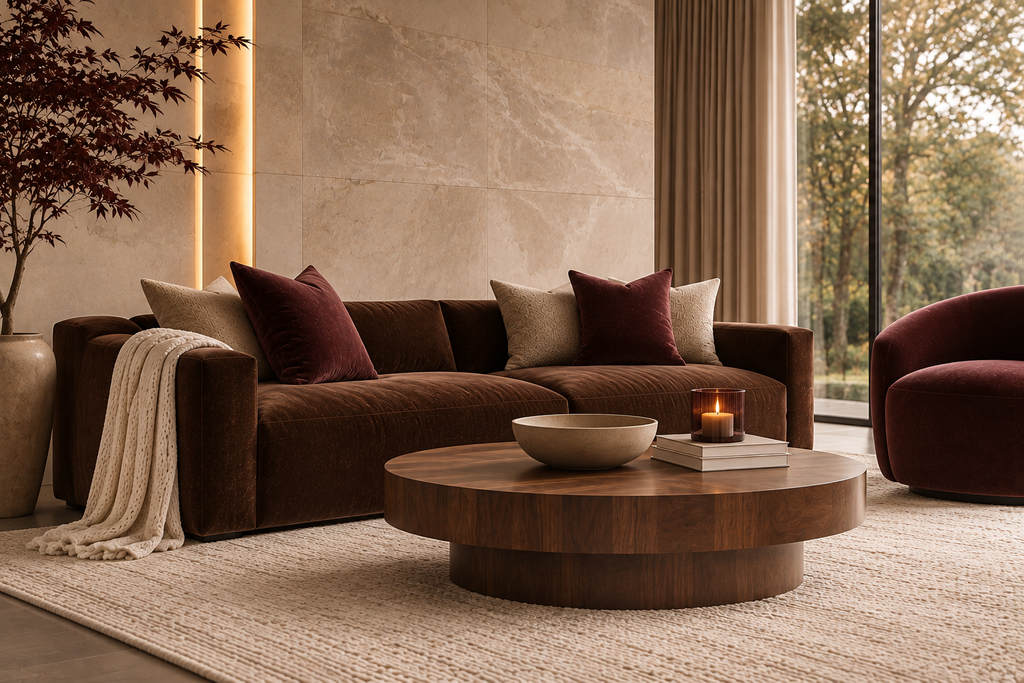
The most important consideration is contrast.
If the couch, rug, walls, and pillows are all dark, the room may feel heavy. Keep at least one large surface light, particularly in a smaller space.
For a brighter version, use burgundy only in pillows and artwork. For a moodier version, pair it with deeper walls while keeping the rug and lighting carefully balanced.
What Color Rug, Pillows, Walls, and Curtains Go With a Brown Couch?
Once you’ve chosen a palette, decide where each color belongs.
The rug and walls create the largest areas of color. Pillows, curtains, and accessories are easier places to introduce an accent.
You don’t need every piece to match. A coordinated room usually benefits from some variation in color, material, and texture.
What Color Rug Goes With a Brown Couch?
For dark brown couches, warm ivory, oatmeal, and softly patterned neutral rugs are excellent starting points.
For caramel or cognac sofas, warm greige and muted taupe can also work well.
Choose based on what your room needs:
| Your room | Rug color to consider |
|---|---|
| Dark chocolate sofa + dim room | Warm ivory |
| Cognac leather + oak floors | Ivory-and-taupe pattern |
| Caramel sofa + beige walls | Textured oatmeal or deeper taupe |
| Brown sofa + gray floors | Warm greige or mixed neutral pattern |
| Brown sofa + busy family room | Subtly patterned, easy-care neutral |
A lighter rug isn’t automatically better, but it is often the easiest way to create contrast beneath dark upholstery.
Rug size matters, too. Aim for a rug large enough to reach beneath at least the front legs of your main seating furniture. Measure the arrangement before ordering rather than choosing a size based only on the coffee table.
For example, if your seating area is too wide for a 5-by-7-foot rug, an 8-by-10-foot option may be worth comparing. Larger rooms may need a 9-by-12-foot rug.
The correct size depends on the furniture arrangement, not simply the sofa color.
What Color Pillows Go With a Brown Couch?
Cream and ivory are versatile pillow colors for nearly every brown sofa, but adding one accent color creates a more interesting arrangement.
Here are three combinations I’d consider:
| Sofa | Pillow combination |
|---|---|
| Chocolate brown | Two cream textured pillows + olive lumbar |
| Cognac leather | Two ivory pillows + dusty blue accent |
| Caramel brown | Oatmeal pillows + one chocolate or muted green accent |
For a standard three-seat sofa, two larger pillows and one lumbar can be a useful starting point. A larger sectional may need more, but there’s no reason to fill every corner with pillows.
For more ideas on balancing light and dark pillows, see my guide to What Color Pillows Go With a Cream Couch?
Style Pick: Textured Cream Pillow Covers
Cream pillow covers are a versatile purchase because they can work with different accent colors as your decorating preferences change.
Look for a visible woven texture and compare the shade against your couch. Check the size, fabric composition, closure, care instructions, and whether inserts are included.

What Color Walls Go With a Brown Couch?
Warm white, soft cream, light greige, and muted beige are reliable wall colors for brown sofas.
For a dark couch in a smaller room, lighter walls can help create visual contrast.
If you prefer a richer atmosphere, muted olive or deeper taupe walls can also work, particularly when the room has good lighting and a lighter rug.
Be careful with stark, cool white beside very warm brown leather. It can create a sharper contrast than you intended.
Before choosing paint, test large samples beside the sofa and flooring. Look at them during the day and after sunset.
What Color Curtains Go With a Brown Couch?
Warm ivory, oatmeal, flax, and soft beige curtains are versatile choices.
For a chocolate-brown sofa, I would usually start with lighter curtains rather than matching the fabric to the couch.
If the walls are cream, ivory curtains can blend softly into the background. Oatmeal panels provide slightly more contrast.
Style Pick: Warm Ivory or Oatmeal Curtain Panels
Choose curtains based on fabric, fullness, opacity, and the window’s measurements—not just the color in the listing photograph.
Look for a soft woven texture, confirm whether the panels are sold individually or as a pair, and check the fabric’s actual composition. “Linen-look” doesn’t necessarily mean linen.

For exact measuring and placement guidance, read 6 Curtain Hanging Mistakes (And How to Hang Curtains Correctly).
How to Make a Brown Couch Look Modern and Less Heavy
If your brown couch feels dated, start by looking at everything around it before considering a replacement.
A dark sofa can look much more contemporary when it’s paired with lighter surrounding finishes and simpler accessories.
Start with the rug. If the couch sits on dark flooring with a small, similarly colored rug, the entire seating area may blend together. A larger ivory or oatmeal rug can create a clearer boundary.
Simplify the furniture. Choose coffee tables and side tables with clean silhouettes rather than heavy, ornate details. Oak, walnut, ceramic, and understated metal finishes can all work.
Edit the pillows. Replace several small, unrelated patterns with a few larger pillows in coordinating colors and textures.
Pay attention to lighting. A brown sofa in a dim corner can appear darker than it actually is. A floor lamp or table lamp can help brighten the seating area, especially in the evening.
Keep some contrast. A room doesn’t need to be entirely beige to look cohesive. Cream textiles, one muted accent color, and a darker wood or metal detail can create a more deliberate composition.
What Should You Change First?
| If your living room feels… | Start with… |
|---|---|
| Too dark | A lighter, properly sized rug |
| Too beige | More contrast through pillows or wood tones |
| Dated | Simpler accessories and cleaner furniture silhouettes |
| Too orange | Ivory, muted blue, or softer green accents |
| Cold because of gray floors | Warm greige, oatmeal, and natural wood |
| Cluttered | Fewer pillows and decorative objects |
You may only need to change one or two things.
A brown couch doesn’t have to be the problem. Sometimes the room simply needs better contrast, more intentional color repetition, or fewer competing accessories.
Frequently Asked Questions
Can a Brown Couch Work With Gray Floors?
Yes. A brown couch can work with gray flooring when the rug and accessories connect the warm and cool tones.
Try warm ivory, mushroom taupe, or a subtle rug pattern containing beige and gray. Avoid automatically adding more cool gray to every surface.
What Colors Look Best With Brown Leather?
Cream, ivory, sage, olive, muted blue, and warm beige are all good options.
For cognac leather, dusty blue can help balance orange warmth. For dark chocolate leather, lighter neutrals often provide useful contrast.
Can You Mix Different Shades of Brown?
Yes. Mixing brown tones can make a room look layered rather than overly matched.
For example, a chocolate sofa can work with a medium-walnut table and lighter oak accents.
The key is varying the depth of the browns and repeating at least one finish elsewhere in the room.
What Colors Make a Dark Brown Couch Look Lighter?
Cream, ivory, oatmeal, and soft warm white create the most obvious light contrast.
A large light rug and lighter walls will generally have more visual impact than adding a few pale pillows alone.
Should a Rug Be Lighter or Darker Than a Brown Couch?
A lighter rug is usually the easiest choice for a dark brown sofa, especially in a small or dim room.
A darker rug can work when the room has plenty of light and other pale surfaces. If the rug and couch are similar in color, choose different textures or a subtle pattern so they don’t visually disappear into one another.
Make Your Brown Couch Work With the Room You Have
You don’t need to replace a brown couch to create a beautiful living room.
Start with its shade, consider your flooring and lighting, then choose one neutral foundation and one accent color. A thoughtfully chosen rug, a few coordinating pillows, and the right curtains may be all you need.
Want help bringing the entire living room together?
Get my free Neutral Living Room Checklist for a simple way to coordinate your furniture, rugs, lighting, and finishing touches.