

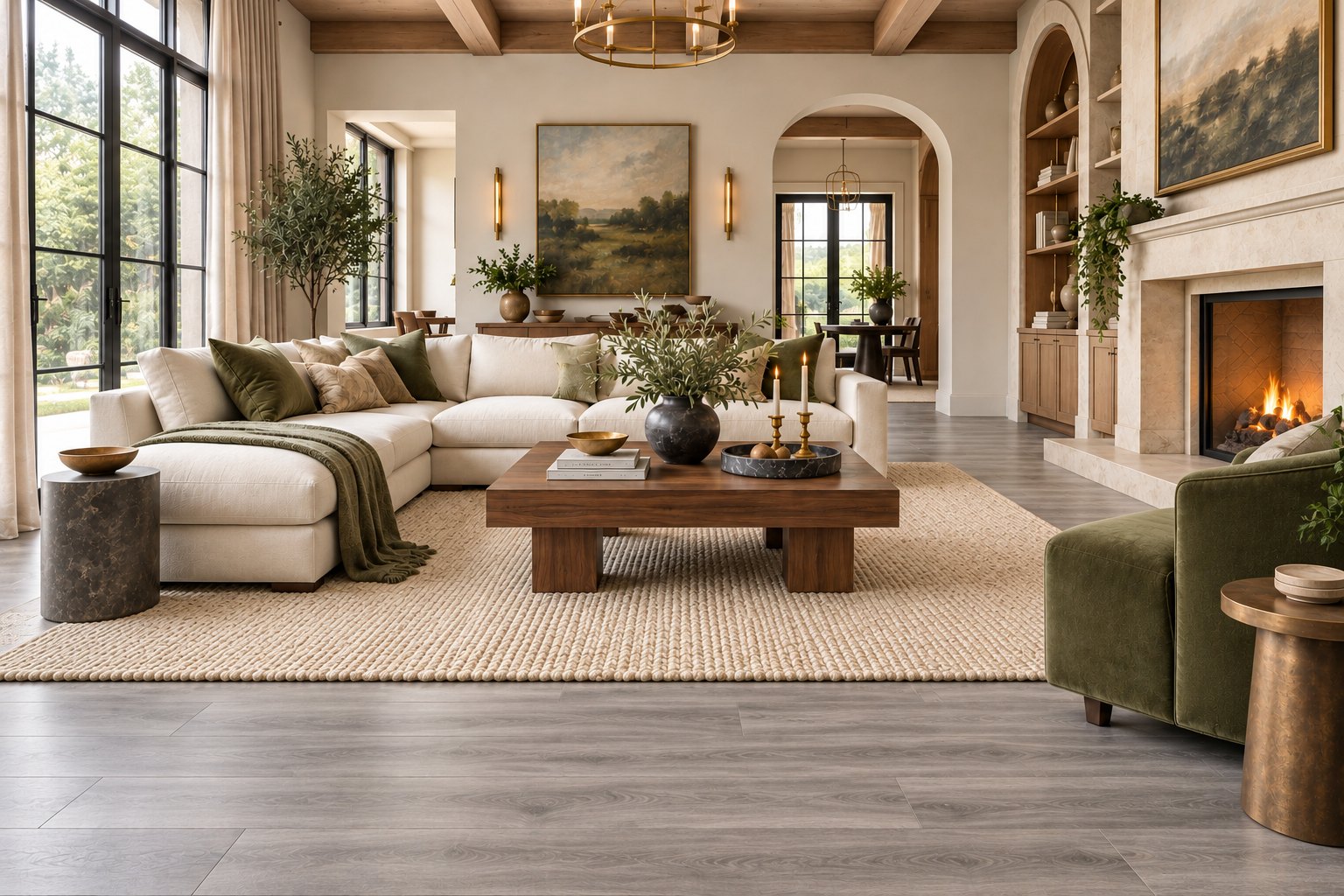
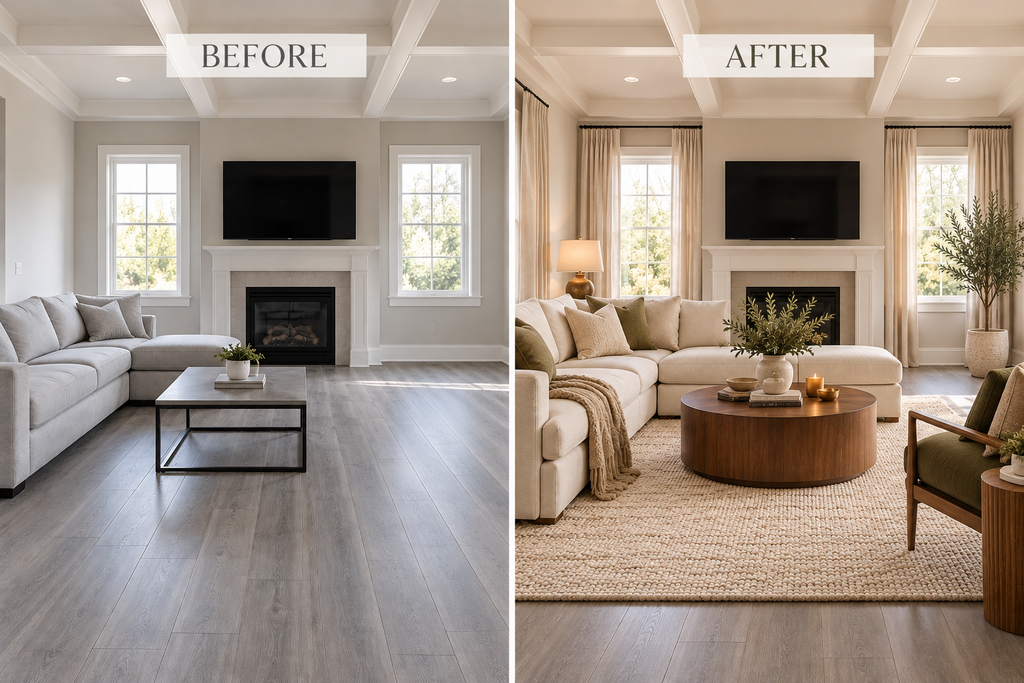
How to warm up gray floors without replacing them? Start with a generously sized rug, natural wood furniture, softer colors, and layered lighting. The most effective change depends on your floor’s undertone and what you already have in the room.
Gray floors can make a living room feel cool or unfinished, especially when they’re paired with white walls, gray furniture, or harsh lighting. Fortunately, you don’t need to replace your flooring to create a warmer atmosphere.
These nine decorating fixes will help you make the most of your existing floors without a major makeover.
This post contains affiliate links. I may earn a commission from qualifying purchases at no additional cost to you. As an Amazon Associate I earn from qualifying purchases.
First, Identify Your Gray Floor’s Undertone
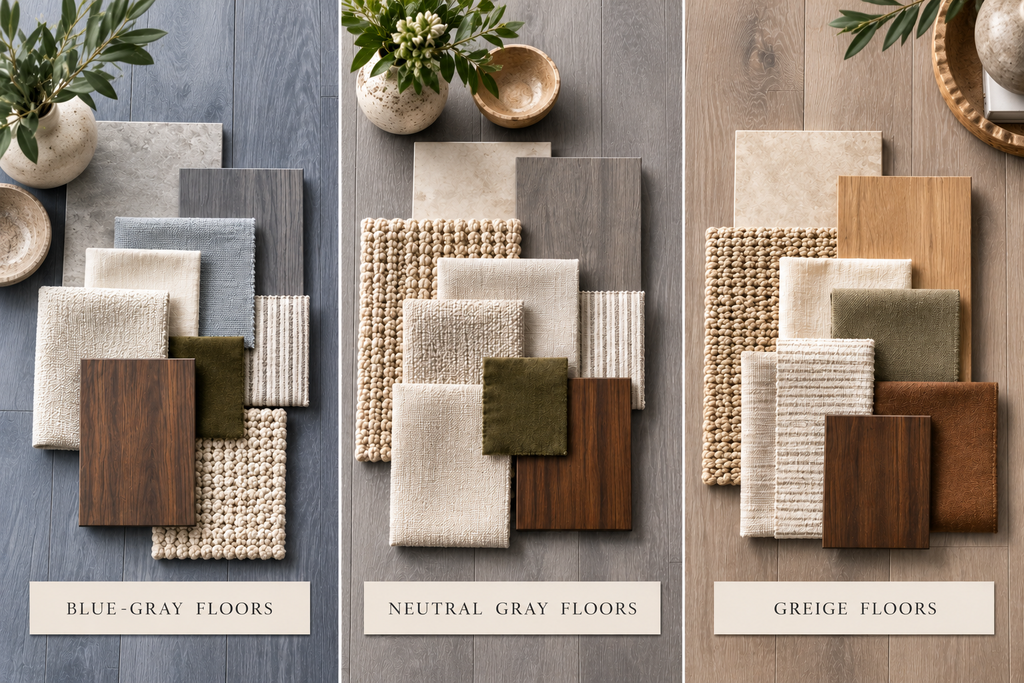
Before choosing new décor, look closely at your flooring. Some gray floors have noticeable blue undertones, others appear neutral, and some lean toward beige or greige.
That difference can influence which colors feel most balanced.
| Floor undertone | Colors to try | Wood finishes |
|---|---|---|
| Cool blue-gray | Warm ivory, camel, muted olive | Walnut, medium oak |
| Neutral gray | Oatmeal, mushroom taupe, terracotta | Natural oak, walnut |
| Warm gray or greige | Cream, soft beige, chocolate brown | Oak, warm walnut |
Look at your floors in natural daylight and again under your usual evening lighting. Place fabric samples beside the flooring rather than judging colors from product photos alone.
You don’t need to eliminate cool tones. Choose two or three coordinating warm colors and repeat them throughout the room.
How to Warm Up Gray Floors: 9 Decorating Fixes
1. Start With a Warm, Properly Sized Area Rug
If your gray flooring dominates the room, an area rug is often the most effective place to start.
Look for warm ivory, oatmeal, or mushroom taupe. A subtle beige-and-brown pattern can also soften cool flooring while adding visual interest.
Pay attention to undertones. A creamy ivory rug usually looks warmer than a bright, blue-white one, while a taupe rug with brown undertones can help connect gray floors to wood furniture.
Rug size matters just as much as color. In a living room, aim for a rug large enough to sit beneath at least the front legs of your main seating pieces.
For many sectional arrangements, an 8×10 or 9×12 rug is worth comparing, but measure your furniture and room before ordering.
If you have vinyl plank flooring, check your flooring manufacturer’s recommendations for rug pads and backings. Certain materials may cause discoloration. For high-traffic living rooms, also consider how easily the rug can be cleaned and whether its pile height works with your furniture and daily routine.
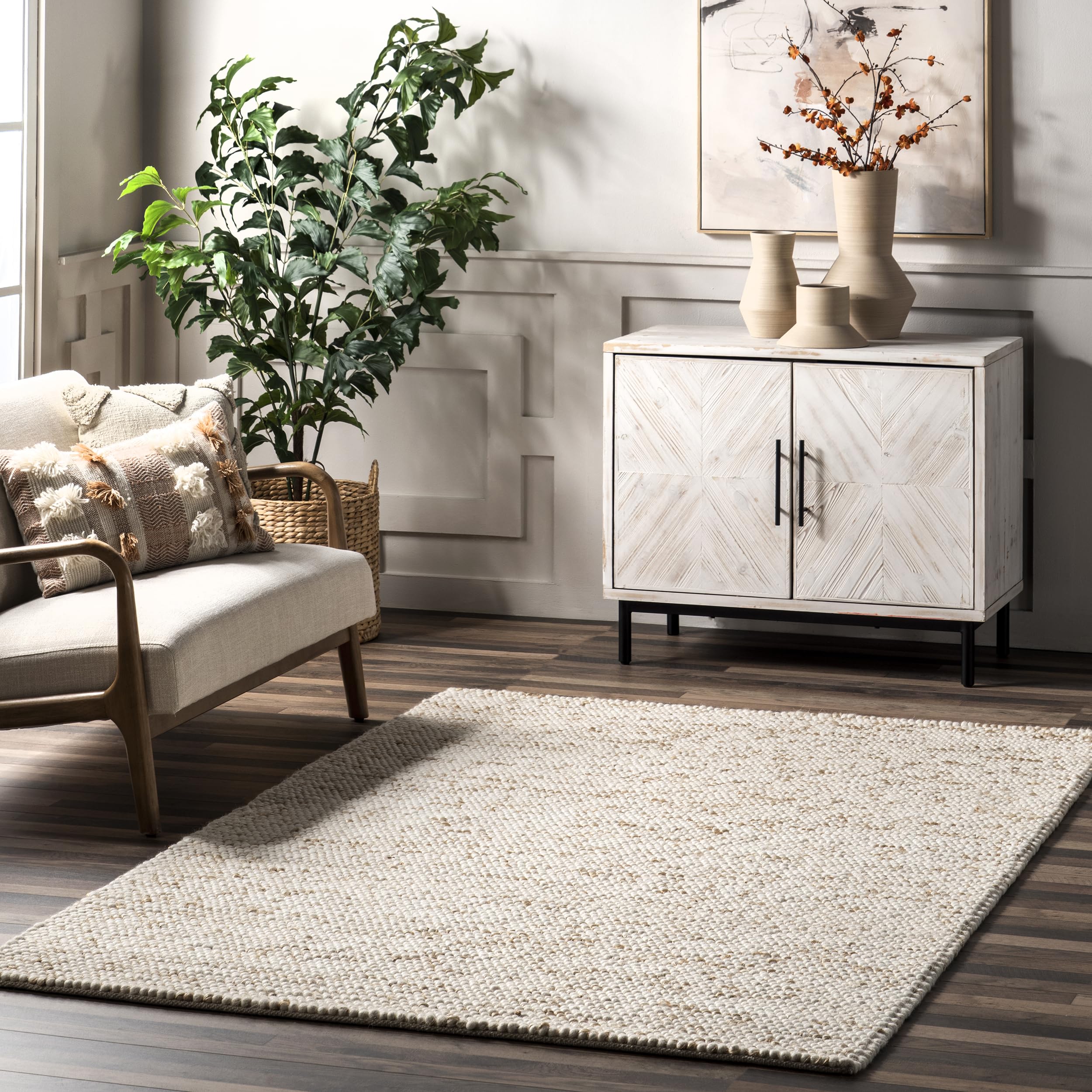
Style Pick: A Warm, Textured Ivory Rug
The nuLOOM Deeanna rug is a beautiful example of how subtle texture and warm ivory tones can soften gray flooring without introducing a busy pattern.
For more guidance, explore The Best Neutral Area Rugs for Living Rooms for rug inspiration, or What Size Rug Goes Under a Sectional? to find the right dimensions for your space.
2. Bring in Natural Wood Furniture
Natural wood adds warmth through both its color and visible grain.
Walnut, medium oak, and warm brown finishes can create appealing contrast with gray flooring without introducing another strong accent color.
For pale blue-gray floors, a walnut coffee table can help ground the seating area. With darker charcoal flooring, medium oak may provide a softer contrast.
You don’t need perfectly matching furniture. Choose one dominant wood finish and repeat it in two or three places, such as a coffee table, side table, and picture frame. A walnut accent table is an easy way to introduce a richer wood tone without replacing your larger furniture pieces.
If you’re purchasing a new table, consider its dimensions as carefully as its finish. A beautiful walnut table can still feel awkward if it’s too large for the sofa.
3. Balance Gray Floors With Warm Neutral Textiles
Gray floors paired with a gray couch can make a living room feel flat, especially when the pillows and throws are gray, too.
Instead of replacing the sofa, introduce warm textiles.
Try this combination:
- Oatmeal or warm ivory rug.
- Two cream textured pillows.
- One camel or muted olive lumbar pillow.
- Soft beige knit throw.
If you have a cream sofa, consider a warm taupe rug, walnut coffee table, and a few deeper accents to keep the room from looking washed out.
Avoid choosing every accessory in exactly the same shade of beige. A little variation in color and texture creates more depth.
For more combinations, see What Color Pillows Go With a Cream Couch? 8 Combinations That Work.
4. Add One Earthy Accent Color
Warm neutrals create a comfortable foundation, but a little color can make the room feel more complete.
Muted olive, camel, terracotta, and cognac are useful choices with gray flooring.
Olive works particularly well with cream upholstery and natural wood. Try two muted olive textured pillows and a landscape print containing similar green tones.
Terracotta or rust can also look beautiful, although they create stronger contrast against blue-gray floors. If you prefer a softer look, use those colors in smaller accents.
Choose one main accent color and repeat it two or three times rather than introducing several unrelated shades.
5. Soften White Walls With Curtains and Texture
Gray floors and white walls can feel stark when there aren’t enough soft materials to balance the hard surfaces.
Warm ivory or oatmeal curtains are an easy starting point. A pair of ivory linen-look curtains can soften bright white walls while adding texture and warmth around the windows.
Choose panels with enough fullness to frame the window, then add complementary textures through:
- Woven or bouclé pillows.
- A soft knit throw.
- Matte ceramics.
- Natural wood accessories.
If your walls are bright white, repeating the curtain color in a rug or pillow can help the room feel more connected.
Texture is especially helpful when you want a neutral palette without everything looking identical.
6. Layer Your Lighting
Lighting can change how gray flooring appears, especially in the evening.
Cool-white bulbs may emphasize blue undertones, while warmer lighting can create a softer atmosphere.
For many living rooms, 2700K bulbs are a useful starting point for warm-looking light. A 3000K bulb can be a good alternative if you prefer a slightly less golden appearance.
Rather than relying on one overhead fixture, combine a floor lamp beside the sofa with a table lamp or another soft light source.
Choose enough brightness for the space, too. Color temperature describes the appearance of the light; lumens describe its output.
A walnut lamp base, aged-brass finish, or linen shade can also add warmth when the light is off.
For placement ideas, explore 4 Best Floor Lamps for Sectional Sofas (And Where to Place Them).
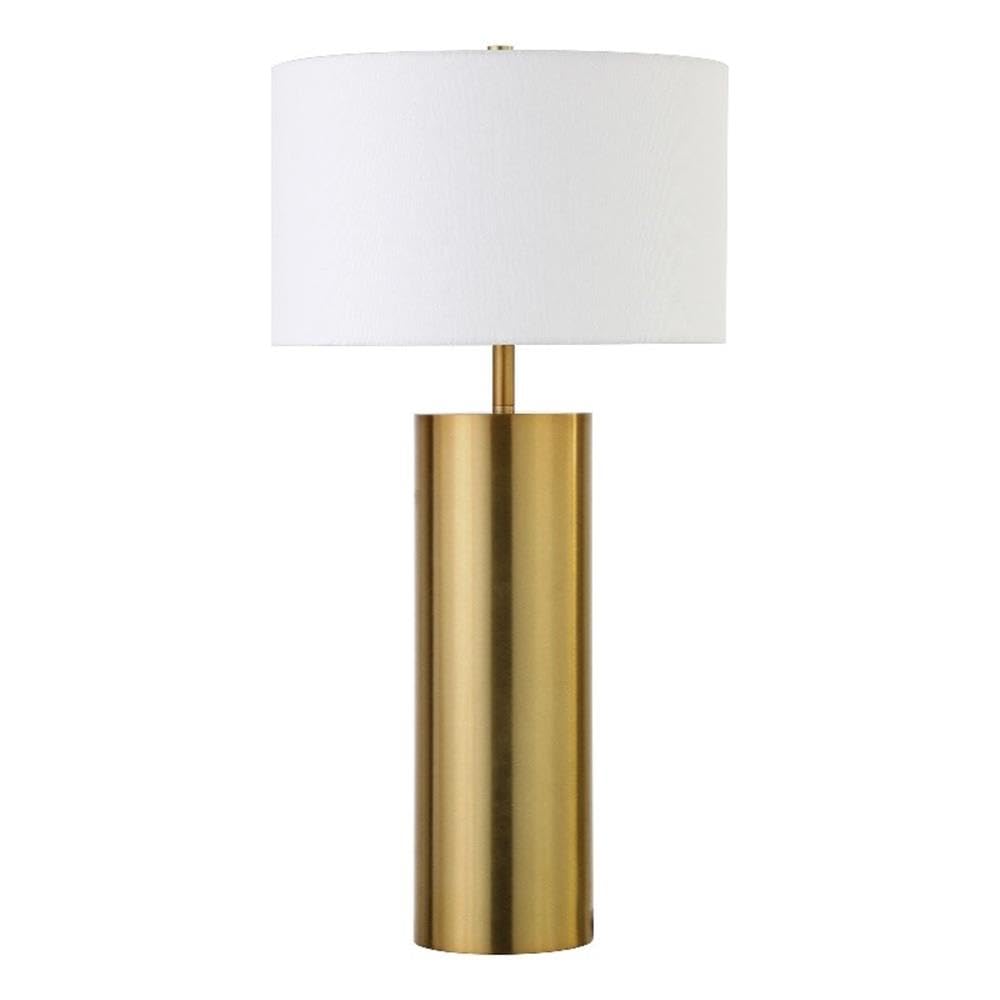
Style Pick: A Warm Metallic Table Lamp
A gold-tone table lamp can add a touch of warmth and contrast to a room with gray floors. Pair it with a 2700K bulb for soft, inviting evening light.
7. Use Artwork to Connect the Palette
Artwork can help bring the room’s colors together.
Instead of choosing a print simply because it contains gray, look for colors already present in your rug, pillows, or furniture.
A foggy landscape with warm taupe, muted olive, and cream can complement a cream sofa and walnut coffee table.
Neutral abstracts, botanical prints, and softly textured artwork in wood frames are other options.
The goal isn’t to match everything perfectly. It’s to repeat enough color that the artwork feels connected to the room.
8. Introduce Contrast Without Making the Room Dark
Warmth doesn’t mean decorating everything in pale beige.
A room filled with cream, ivory, and oatmeal can feel washed out when there’s no contrast.
Introduce a richer element through a walnut coffee table, chocolate-brown accent chair, or a few darker frames.
For example, a cream sofa, oatmeal rug, walnut table, and muted olive pillows create a balanced mix of light and dark.
Consider scale before buying. A large dark chair may overwhelm a small room, while a smaller accent table can provide contrast without making the space feel crowded.
9. Add Warmth to the Areas Where Gray Flooring Is Most Visible
Sometimes the problem isn’t the color of the flooring—it’s how much of it you see.
A large, uninterrupted stretch of gray floor can dominate the room, even when your furniture and accessories are warm.
Look for places where the flooring feels especially exposed, such as the area between your sofa and accent chairs or the space beside a seating arrangement.
A properly sized rug can connect the furniture, while a small upholstered ottoman or wood accent table can make an empty corner feel more intentional.
Avoid filling every open area. Keep comfortable walking paths and focus on creating a balanced seating arrangement rather than covering every inch of flooring.
What Should You Change First? A Gray Floor Decorating Guide
The most effective change depends on what’s making your room feel cold.
| If your room has… | Start with… |
|---|---|
| Too much exposed gray flooring | A larger warm-neutral rug |
| Gray floors and a gray couch | Cream, oatmeal, or camel textiles |
| Gray floors and white walls | Warm curtains and natural wood |
| A cold feeling after sunset | Layered lighting with warmer bulbs |
| Pale furniture that looks washed out | Walnut or chocolate-brown contrast |
| Several colors that don’t coordinate | One repeated warm-neutral palette |
On a smaller budget, start with the biggest visual problem rather than buying several unrelated accessories.
If your rug is undersized, replacing it may make more difference than adding decorative objects. If the room already looks warm during the day, improving the evening lighting may be all you need.
Frequently Asked Questions
Can Beige Furniture Work With Gray Floors?
Yes. Beige furniture can work beautifully with gray floors, especially when the beige coordinates with your rug, curtains, and wood finishes. Compare samples in your room to avoid combining unrelated undertones.
What Rug Color Makes Gray Floors Look Warmer?
Warm ivory, oatmeal, mushroom taupe, and muted beige are good starting points. Choose based on your floor’s undertone, surrounding furniture, and how much contrast you want.
How Do You Warm Up Gray Vinyl Floors in a Rental?
Focus on nonpermanent changes such as rugs, curtains, pillows, lamps, and artwork. Before adding a rug, confirm that its backing and pad are compatible with your flooring.
Want a warmer, more pulled-together living room?
Get the free Neutral Living Room Checklist from Nicole Home Finds for simple ideas to help you coordinate colors, furniture, and finishing touches.
Make Your Gray Floors Work With Your Style
Gray floors don’t have to make your home feel cold. Start with the element that needs the most attention—whether that’s an undersized rug, too many cool tones, or harsh lighting—then build around a few coordinating colors and materials.
For more inspiration, explore The Best Neutral Area Rugs for Living Rooms and find a style that complements the floors you already have.