

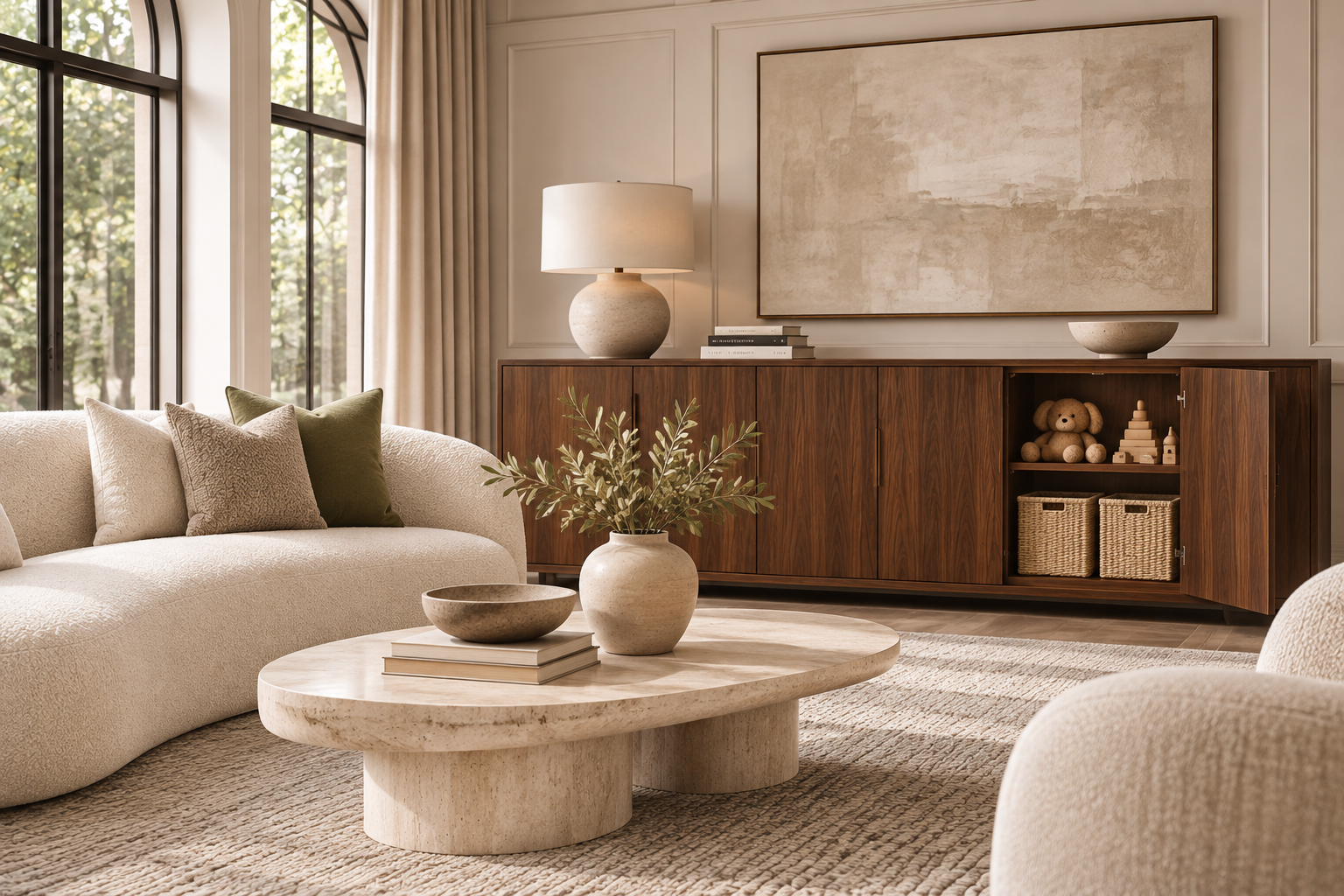
When the living room doubles as a playroom, toys can quickly take over the space. But keeping them organized doesn’t mean you need colorful plastic bins in every corner.
The most useful living room toy storage ideas combine concealed storage with furniture that already belongs in the room. Think upholstered ottomans, walnut cabinets, hidden drawers, and attractive baskets.
Whether you have a small living room or no dedicated playroom, these ten solutions will help you find a place for the toys without sacrificing your decorating style.
This post contains affiliate links. I may earn a commission from qualifying purchases at no additional cost to you. As an Amazon Associate I earn from qualifying purchases.
Which Living Room Toy Storage Works Best?
Start with the toys you need to hide, not the furniture you want to buy. Different storage pieces solve different problems.
| Storage type | Best for | Main consideration |
|---|---|---|
| Closed-door cabinet | Mixed toys, puzzles, games | Shelf depth and stability |
| Storage ottoman | Soft toys and loose items | Lid safety and capacity |
| Coffee table with drawers | Small toys and art supplies | Drawer dimensions |
| Lidded basket | Stuffed animals | Lightweight, removable lid |
| Slim cabinet | Small living rooms | Floor space and clearance |
| Storage bench | Larger lightweight toys | Lid design and seating suitability |
The simplest choice: A closed-door cabinet is usually the most versatile option for mixed toys. If you’re mainly hiding stuffed animals and other soft items, a basket or appropriately designed storage ottoman may be all you need.
1. Use a Storage Ottoman to Hide Everyday Toys
A storage ottoman is a practical way to conceal toys without adding another obvious organizer to the living room.
An upholstered design in oatmeal, warm beige, or taupe can blend beautifully with a cream sofa and walnut furniture. Choose a rectangular shape if you want a substantial footrest, or a smaller square ottoman for a compact seating area.
Storage ottomans work especially well for stuffed animals, soft blocks, and other lightweight toys that don’t need individual compartments.
What to look for: Check the usable interior dimensions, upholstery, construction, and lid mechanism. If children will access the storage, a heavy lid that can fall closed is a serious concern.
For a family living room, I would prioritize a simple upholstered design with a manufacturer-documented lid-support mechanism rather than an oversized decorative trunk.
Best for: Soft toys and quick cleanup near the sofa.
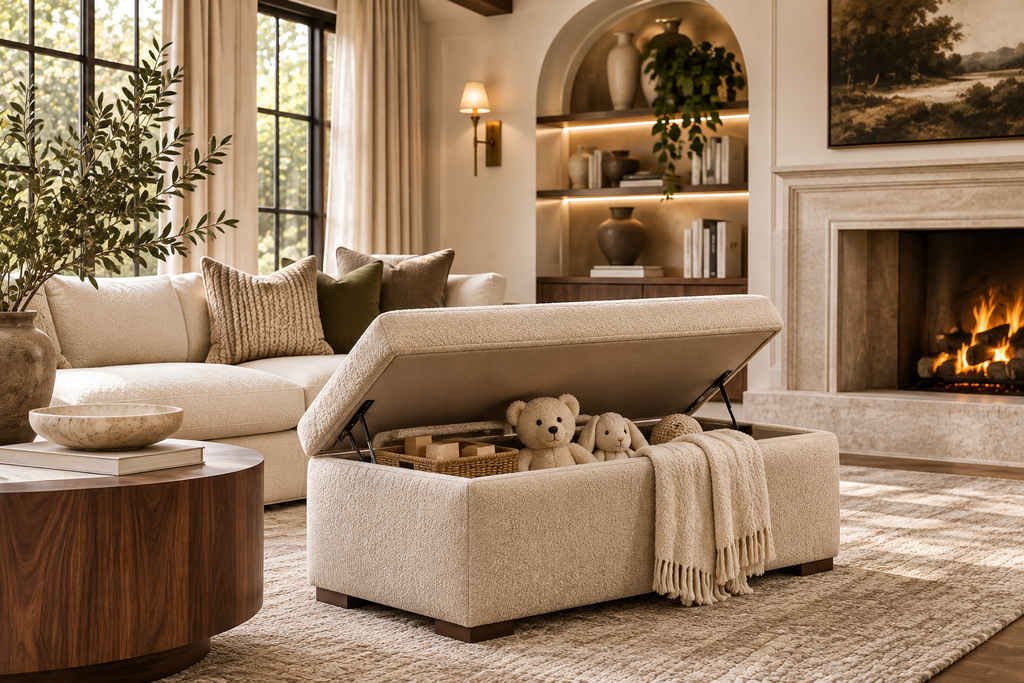
A Neutral Upholstered Storage Ottoman
Look for a rectangular upholstered ottoman in beige or oatmeal with a simple silhouette, useful interior capacity, and an appropriate lid mechanism.
This is a particularly good option when you want storage that also functions as a footrest or extra surface.

2. Choose a Closed-Door Cabinet for Organized Toy Storage
If you’re storing puzzles, games, toy cars, and building sets, a closed-door cabinet is often a better investment than one large basket.
The doors conceal everything, while shelves let you separate toys by category.
A low walnut sideboard works especially well in a warm neutral living room. Natural oak is another beautiful option, particularly with cream upholstery and light walls.
Inside, use a few removable containers to keep smaller pieces together. You don’t need matching organizers on every shelf; the important thing is being able to find and put away toys easily.
What to look for: Adjustable shelves, enough interior depth for your largest containers, doors that open comfortably, and appropriate furniture anchoring.
A low cabinet can also be more visually balanced than a tall shelving unit, especially in a room with limited wall space.
Best for: Families with several types of toys that need separate storage.
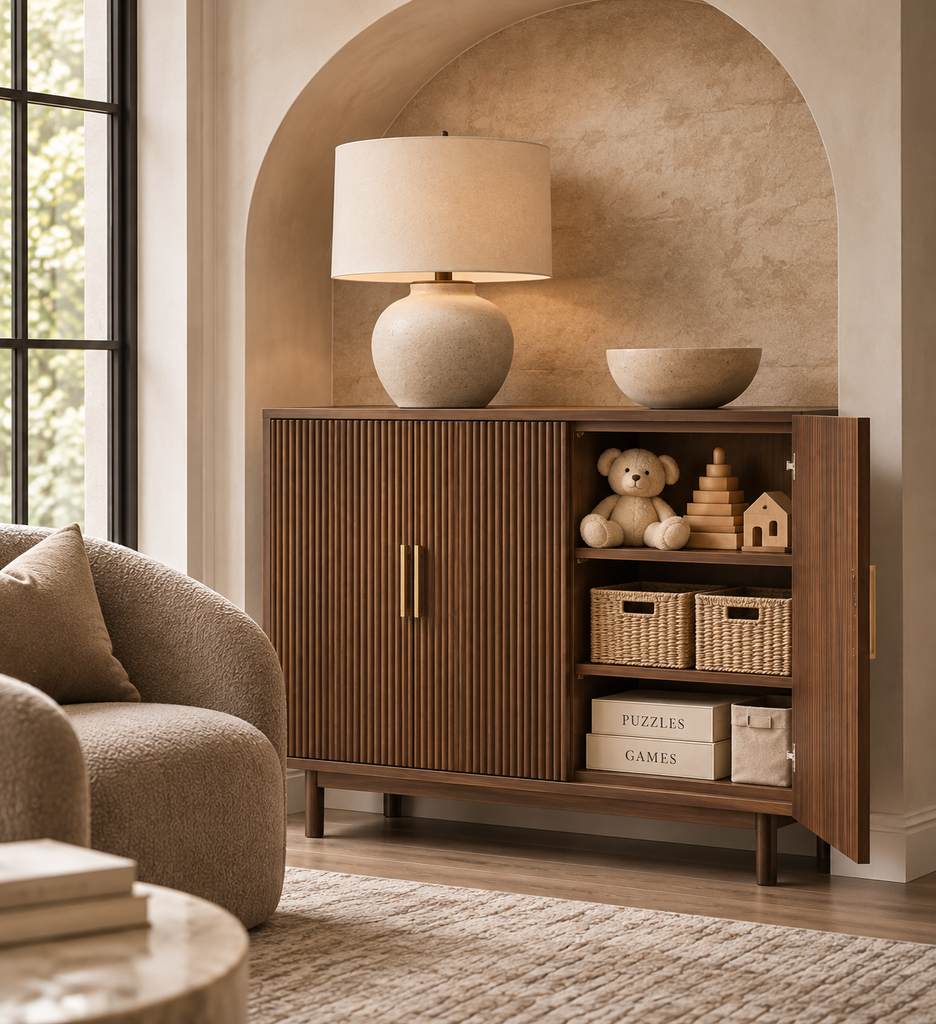
A Walnut Cabinet With Concealed Storage
A walnut-finish cabinet with closed doors and adjustable shelving is a versatile option because it can eventually store books, games, or everyday living room essentials.
Choose a piece with enough depth for your largest toy containers rather than purchasing solely for its appearance.

3. Pick a Coffee Table With Hidden Drawers
If puzzles, coloring supplies, and small toys regularly end up on your coffee table, choose one with built-in drawers.
Drawers allow you to keep everyday activities close to the sofa without leaving everything on display.
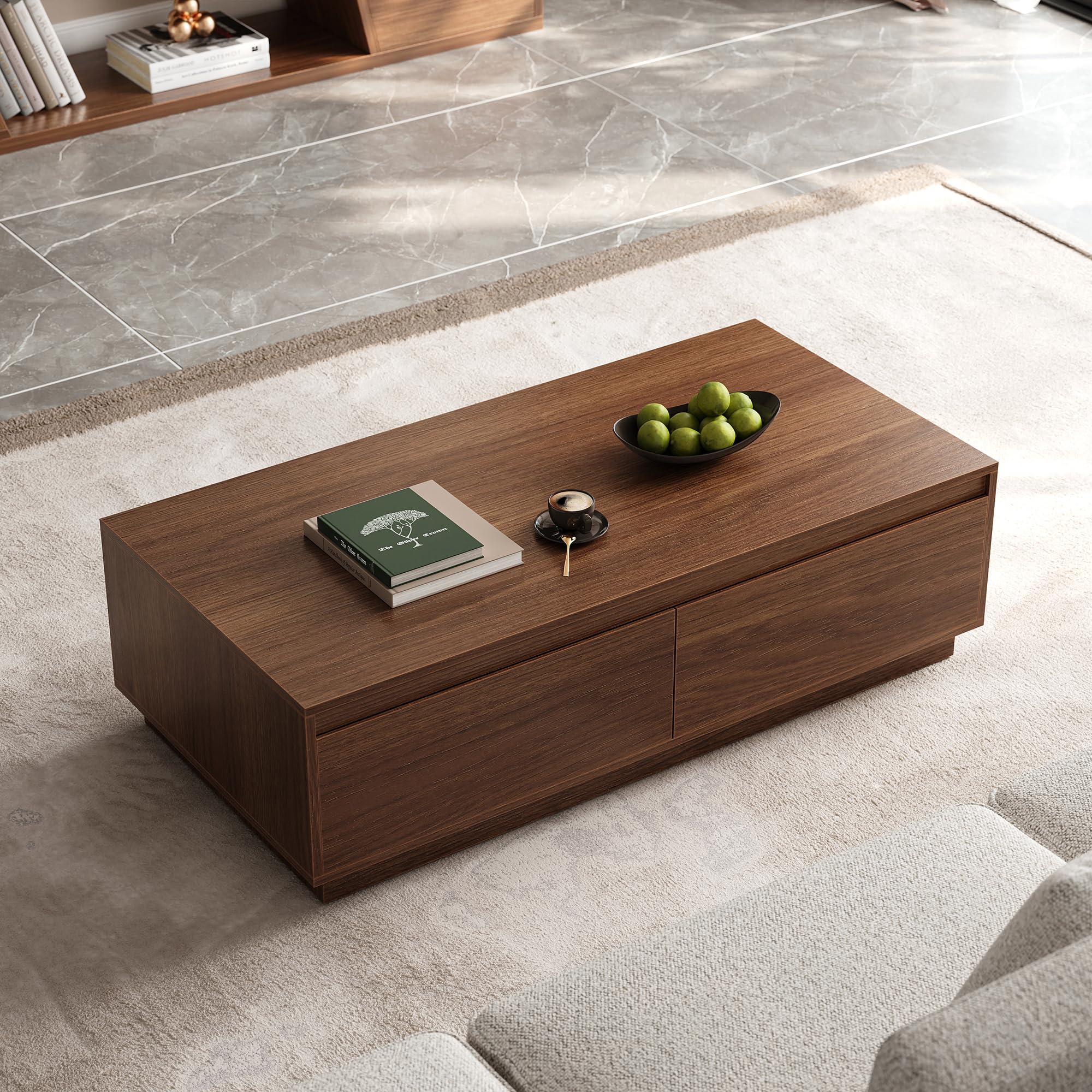
A walnut coffee table with simple drawer fronts adds warmth while keeping the design clean and uncluttered.
Choose drawers over a lift-top compartment when you want quick access to small items without moving everything off the tabletop.
Before buying, check the drawer’s interior height and depth. Some coffee tables have surprisingly shallow drawers that won’t accommodate thicker puzzles or games.
Also consider how much space is needed to pull the drawers open around your sofa and accent chairs.
For more furniture-sizing advice, see my guide to the best coffee tables for sectional sofas.
Best for: Puzzles, coloring books, small games, and craft supplies.
A Walnut Coffee Table With Storage Drawers
Look for a rectangular or softly rounded walnut-finish table with enclosed drawers rather than open cubbies.
This style works particularly well when you want the coffee table to serve as everyday toy storage without making the room look like a playroom.
4. Hide Stuffed Animals in a Decorative Lidded Basket
Sometimes the simplest storage solution is also the most attractive.
A generously sized woven basket can conceal stuffed animals and lightweight toys while adding natural texture to the room.
Look for seagrass, rattan, or a soft neutral woven material. A basket beside a cream sofa or accent chair feels intentional when its color complements the surrounding furniture.
My decorating rule: Choose one substantial basket instead of scattering several smaller ones around the living room.
The larger basket creates a clear storage destination and avoids making every corner feel occupied.
For children who access the basket themselves, choose a lightweight, removable lid without a latch. Inspect the basket for sharp edges, loose pieces, and anything that could snag little hands.
Best for: Stuffed animals and lightweight toys that don’t require sorting.
A Natural Woven Storage Basket
A generously sized woven basket in a natural finish is a simple way to soften a room filled with upholstered furniture and wood.
Choose a design with a suitable removable lid and enough capacity for the toys you intend to store.

5. Turn Your Existing TV Console Into Toy Storage
Before buying another cabinet, check whether your media console already has space for toys.
A TV console with closed lower compartments can be surprisingly useful, especially when children play on the rug in front of the sofa.
Dedicate one cabinet to toys and use a couple of removable containers inside. One might hold toy cars, while another keeps small building sets together.
The outside of the console stays exactly the same, so there’s no additional furniture competing for space.
Keep children’s items separate from electronics, cables, outlets, and equipment that needs ventilation.
Best for: Small toys used regularly in the main seating area.
This is one of the first solutions I would try if your living room already feels full.
6. Use a Slim Cabinet in a Small Living Room
A small living room needs storage that works with the available floor space rather than competing with it.
A shallow, closed-door cabinet can fit along a short wall or in an unused corner without the bulk of a traditional sideboard.
Natural oak and medium walnut finishes look especially good with warm white walls, neutral upholstery, and simple brass hardware.
The important detail is depth.
For example, a cabinet with an exterior depth of 12 inches might accommodate small bins and puzzles, but it may not fit bulky toys. Always check the interior dimensions before purchasing.
Measure the wall space, door swing, and walking route. A narrow cabinet isn’t useful if opening it blocks the main path through the room.
For more ideas on making unused spaces functional, see my 10 empty living room corner ideas.
Best for: Apartments, narrow living rooms, and compact corners.
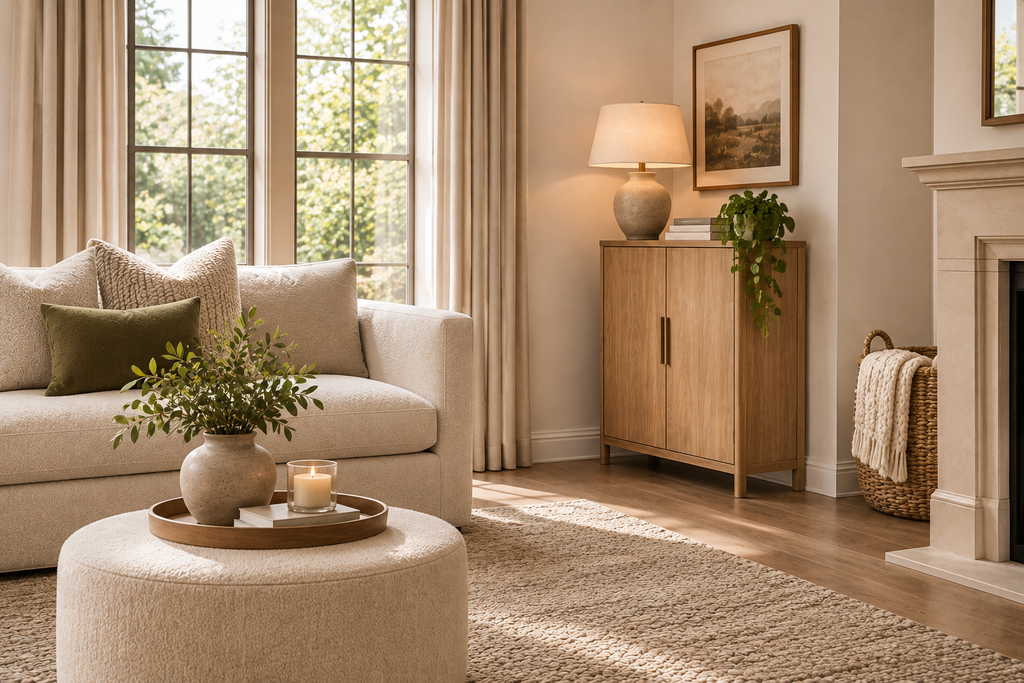
7. Add a Storage Bench Beneath a Window
A storage bench can provide concealed storage in a spot that might otherwise go unused.
Placed beneath a window or along an open wall, an upholstered bench can feel like part of the furniture arrangement rather than a dedicated toy chest.
Choose a simple silhouette in beige or taupe upholstery, or a natural wood finish that coordinates with the rest of the room.
This solution works well for lightweight toys that need more space than a shallow drawer can provide.
What to look for: Verify the storage compartment dimensions, lid operation, and manufacturer’s seating weight limit if you plan to use it as a seat.
A storage bench is not automatically appropriate for young children simply because it has a soft-close hinge. Follow the manufacturer’s instructions and avoid designs with heavy, unsupported, or locking lids.
Best for: Larger lightweight toys, blankets, and storage along an available wall.
A Natural-Wood Corner Storage Bench
A straight upholstered storage bench is usually the most versatile choice for a living room window or open wall. An L-shaped wood storage bench can also work in a larger corner, provided both walls have enough space and the seating arrangement makes sense.
Only choose a storage bench for child-accessible toys if its design, instructions, and safety features make it appropriate for that purpose.

8. Conceal Toys Behind Built-In Cabinet Doors
Built-in shelves can make a living room feel beautifully finished, but not everything needs to be displayed.
If your built-ins have lower cabinets, reserve those enclosed spaces for toys and keep the upper shelves for books and decorative objects.
This creates a useful balance: everyday clutter stays hidden, while the visible shelves remain calm and intentional.
For a warm, contemporary look, combine oak or painted cabinetry with a few ceramic pieces, books, and subtle brass accents.
You don’t need to decorate every shelf. Leaving some open space makes the arrangement feel more considered.
If you’re styling the upper shelves, see my guide to styling built-in shelves without making them look cluttered for additional ideas.
Best for: Living rooms with existing built-in cabinetry.
There’s no reason to install expensive custom cabinetry solely for toy storage if a freestanding cabinet can solve the same problem.
9. Use Under-Sofa Storage for Flat Toys and Games
If your sofa has enough clearance underneath, shallow containers can provide hidden storage without taking up additional floor space.
This works particularly well for flat puzzles, coloring books, and occasional-use games.
Choose low-profile containers that slide out easily and remain completely out of sight.
Before shopping, measure from the floor to the lowest part of the sofa frame, then allow extra clearance so the container can be removed comfortably.
Avoid placing storage near reclining mechanisms, exposed wiring, or moving furniture components.
Best for: Flat toys and activities that don’t need daily access.
If your sofa sits close to the floor, skip this idea rather than buying containers that will be difficult to use.
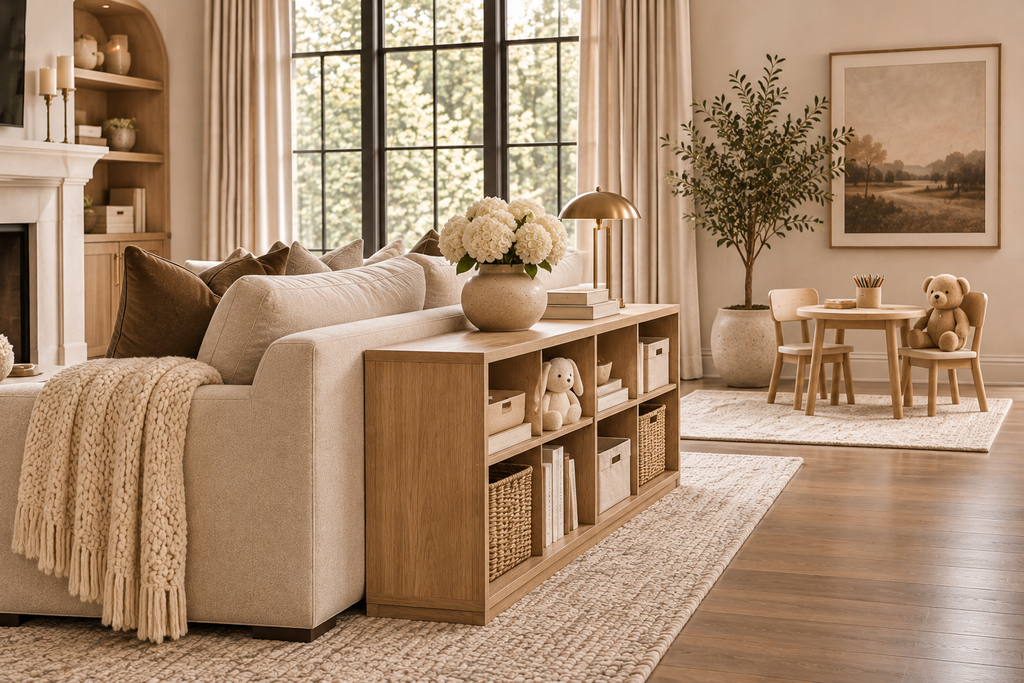
10. Create a Discreet Toy Zone Behind a Floating Sofa
In an open-concept living room, a floating sofa can create a natural division between the main seating area and a small play space.
If there’s enough room behind the sofa, consider a low storage unit along the back of the seating area.
A low shelving unit with decorative storage baskets can hide toys while creating a subtle division between the seating area and children’s play space.
Keep the furniture lower than the sofa back where possible, and choose a finish that coordinates with the room rather than drawing attention to the storage.
This solution only works when the layout allows it. Don’t sacrifice a comfortable walking path or create an unstable arrangement just to fit another cabinet.
For help planning circulation and furniture placement, see my sectional sofa layout ideas.
Best for: Open-plan living rooms with extra space behind the seating area.
How to Keep Living Room Toy Storage Looking Stylish
The easiest way to make toy storage blend into your living room is to treat it like any other furniture decision.
Choose finishes that work with what you already own. Walnut pairs beautifully with cream upholstery, warm white walls, and muted olive accents. Light oak works well with soft beige, woven textures, and natural linen.
You don’t need every wood tone to match, but repeating one or two finishes creates a more cohesive room.
Keep colorful toys behind doors or inside suitable containers, and avoid placing storage baskets in every available corner.
Finally, limit the number of toys kept in the living room. A smaller selection is easier to put away, and you can rotate other toys from a separate storage area.
The goal isn’t a living room that never looks lived in. It’s a space that can return to feeling organized without a complicated cleanup routine.
Frequently Asked Questions
How do you hide large toys in a living room?
Start by measuring the largest toys, including their height and width. Then look for a cabinet with adjustable shelves, an appropriately designed storage bench, or another storage space that can accommodate them without forcing the doors or lid closed.
For ride-on toys and other oversized items, a designated play zone may be more practical than trying to conceal everything inside furniture.
What should you look for when choosing toy storage for toddlers?
Choose low, stable storage that children can access safely. Avoid heavy, unsupported lids, locking compartments, and furniture that could tip over. Anchor cabinets according to the manufacturer’s instructions, and always check that storage furniture is appropriate for use around young children.
A Beautiful Living Room Can Still Be Family-Friendly
If you’re not sure where to begin, choose the one storage solution that addresses your biggest source of clutter.
For mixed toys, start with a closed cabinet. For stuffed animals, try a suitable basket or storage ottoman. And if your room already has unused cabinet space, organize that before purchasing anything new.
A few thoughtful changes can make your living room easier to use without losing the warm, comfortable look you love.
Want Your Living Room to Feel More Pulled Together?
Download the free Neutral Living Room Checklist from Nicole Home Finds for a simple guide to choosing colors, furniture, textures, and finishing touches that create a cohesive space.