

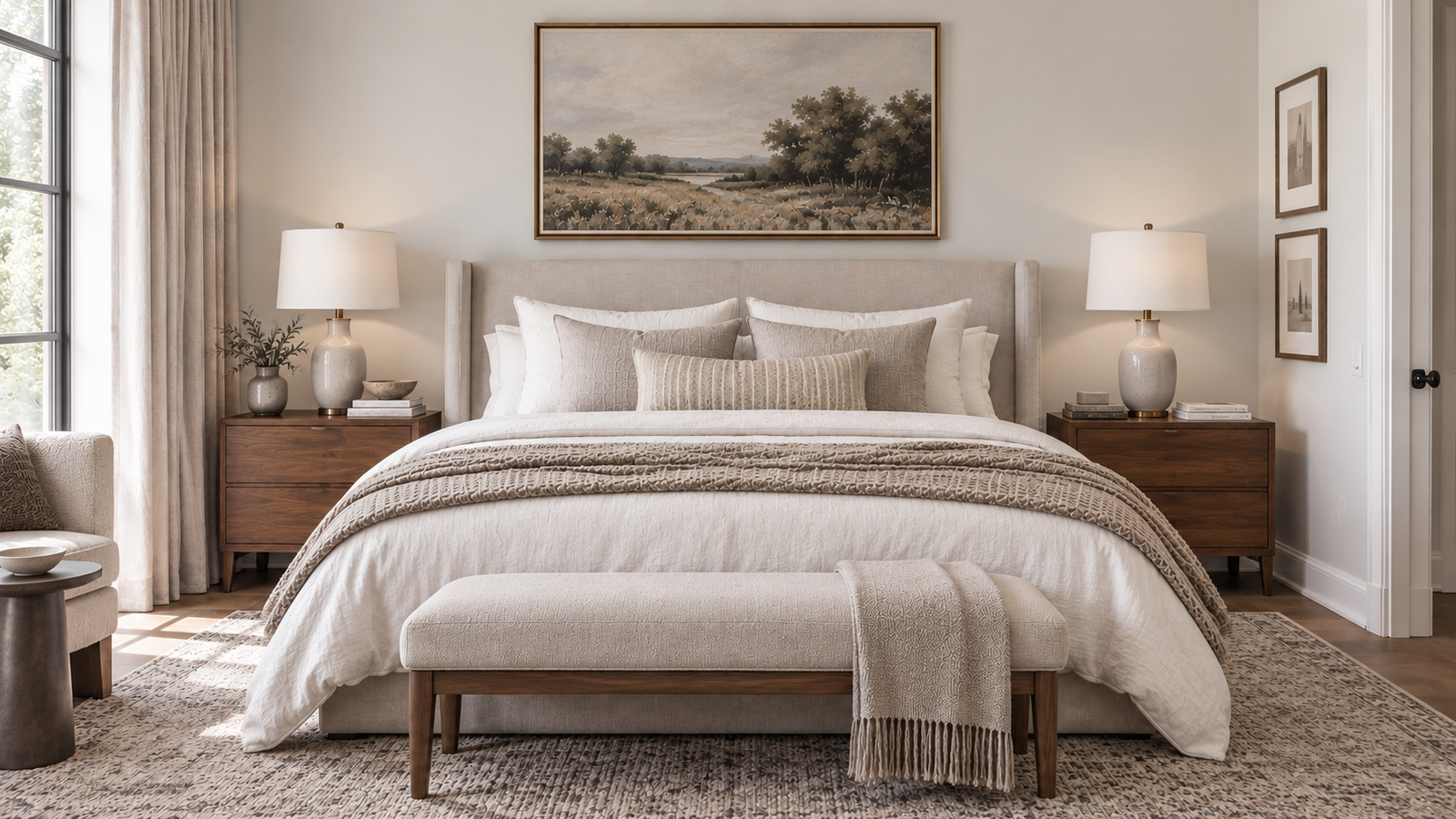
A neutral bedroom can have beautiful cream bedding, beige walls and natural finishes and still feel flat. Usually, the answer isn’t adding more beige—or filling every empty surface with decor.
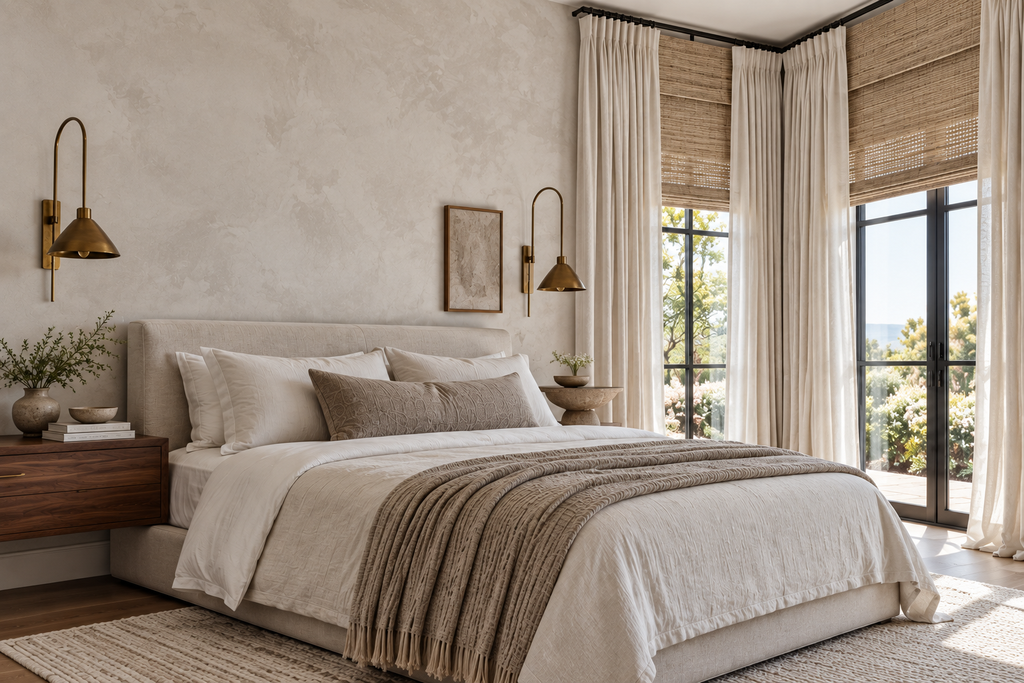
The best cozy neutral bedroom ideas create contrast within a quiet palette. Different tones, textures and materials give the room depth, while warm wood, well-scaled pieces and a few deeper accents keep everything from blending together.
If your bedroom feels a little cold, bland or unfinished, start by figuring out what’s missing. You may need to change much less than you think.
Affiliate disclosure: This post contains affiliate links. I may earn a commission if you purchase through these links, at no additional cost to you.
What Makes a Neutral Bedroom Feel Cozy Instead of Flat?
A cozy neutral bedroom needs variation, not more stuff.
When the walls, bedding, rug and furniture are all similar in color, texture and visual weight, the room can look one-dimensional. Instead of trying to match every shade of cream or beige, create subtle differences.
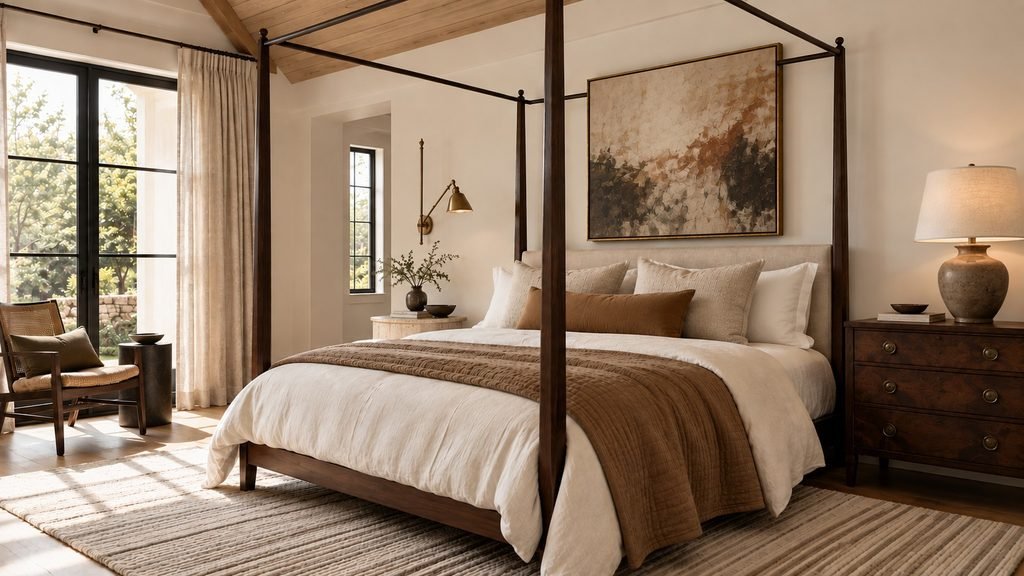
A warm-white room, for example, might combine an ivory upholstered bed, oatmeal bedding, mushroom curtains, walnut nightstands and a small aged-brass detail. The palette still feels quiet, but every layer doesn’t disappear into the next.
Texture matters for the same reason. Smooth cotton, relaxed linen, wool, warm wood and ceramic each add a different surface and visual weight, so the room can feel layered without needing more color or more decor.
Why Does Your Neutral Bedroom Feel Off?
Before buying anything, identify the problem you’re actually trying to solve.
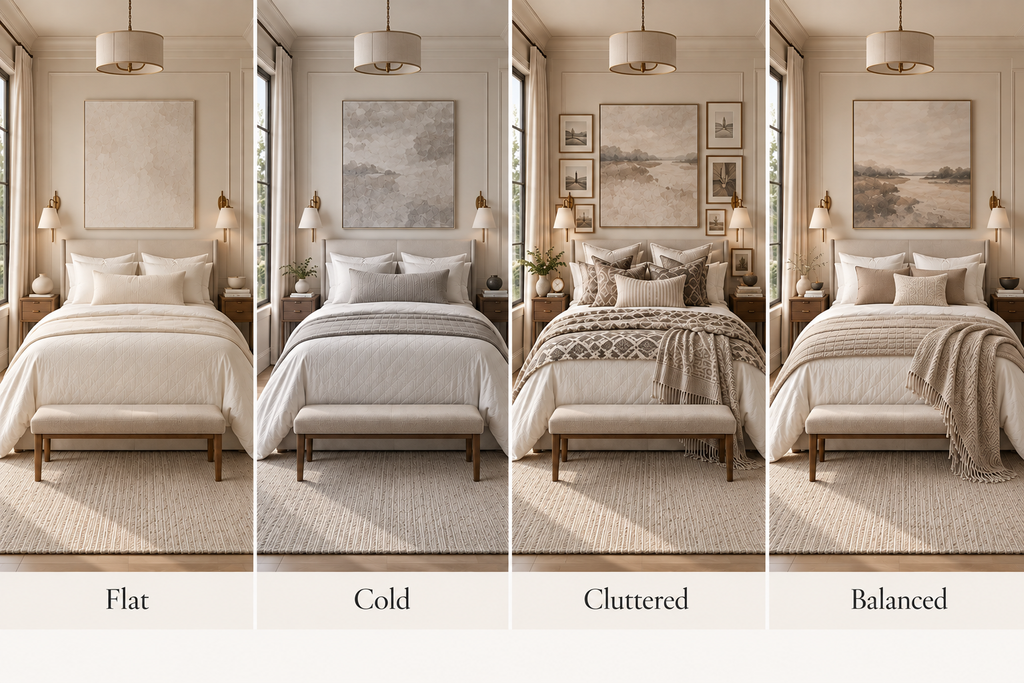
| If the room feels… | Check first | Try this first |
|---|---|---|
| Flat | Everything is a similar light tone | Add one medium or deeper neutral |
| Cold | Pale finishes dominate | Introduce warm wood or a warmer-looking textile |
| Too beige | There isn’t enough contrast | Mix cream with mushroom, brown, walnut or another distinct neutral |
| Cluttered | Too many small pieces compete for attention | Remove a few accessories before adding anything |
| Unfinished | Nothing anchors the room | Look at the bed, rug or artwork first |
| Overly matched | Furniture and finishes repeat too exactly | Vary one material or finish |
| Disconnected | Colors and materials appear only once | Repeat two or three key tones or materials elsewhere |
The goal isn’t to use every idea below. Start with the problem your room actually has.
15 Cozy Neutral Bedroom Ideas
1. Build the Palette With More Than One Neutral
A neutral palette doesn’t have to mean one shade of beige repeated from wall to wall.
Try combining warm white, ivory, oatmeal, mushroom, taupe and brown. The differences can be subtle, but they should be visible enough that the bedding doesn’t disappear into the walls and the furniture doesn’t disappear into the rug.
One easy combination is:
warm-white walls + ivory bed + oatmeal bedding + mushroom curtains + medium walnut
If you’re starting from scratch, choose three or four related neutrals before shopping. It’s usually easier to create a layered room when you’re looking for complementary tones rather than trying to match every new piece to the first beige item you bought.
2. Create Contrast With Light and Dark Neutrals
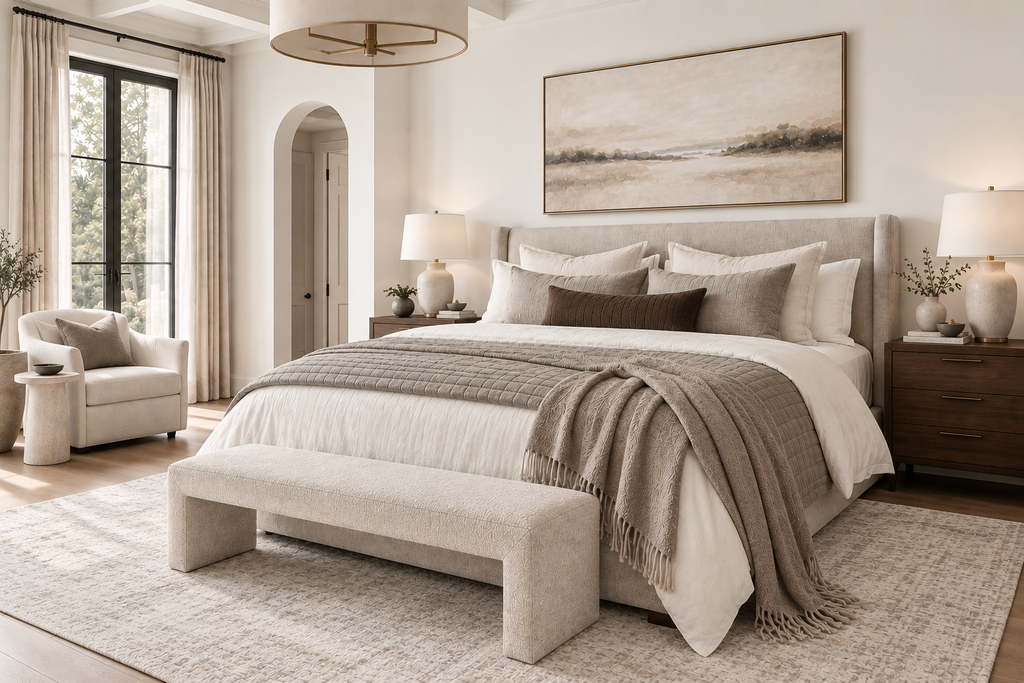
If everything in the room is pale, give the eye somewhere to land.
You don’t need black furniture or a dramatic accent wall. A walnut nightstand, deep brown throw, darker wood frame or bronze lamp may provide enough contrast against cream and ivory.
A simple way to check your room is to look for light, medium and deeper tones. If almost everything falls into the light category, introduce one or two medium-to-deep elements before adding another color.
This is especially useful in an all-cream bedroom. Often, the room doesn’t need more color—it needs a little more contrast.
3. Add Warm Wood to Break Up Cream and Beige
Warm wood is one of the easiest ways to add depth without disrupting a neutral palette.
Walnut creates noticeable contrast against ivory, oatmeal and cream. Warm oak has a softer effect and works well when you want to keep the room lighter.
You don’t need a matching bedroom set, either. An upholstered bed can work with walnut nightstands, a painted dresser and an aged-brass lamp. Slightly varied finishes often look more collected than the same wood repeated on every piece.
If your room already contains a lot of pale upholstery and light textiles, look at the larger furniture before buying more decorative objects. One substantial wood piece may do more for the room than several small accessories.
As an Amazon Associate I earn from qualifying purchases.
Nightstand
A Warm-Wood Nightstand to Add Contrast

Warm walnut adds needed contrast against pale bedding, while the clean two-drawer design keeps the look simple and versatile.
4. Layer the Bed With Different Textures—Not Just More Pillows
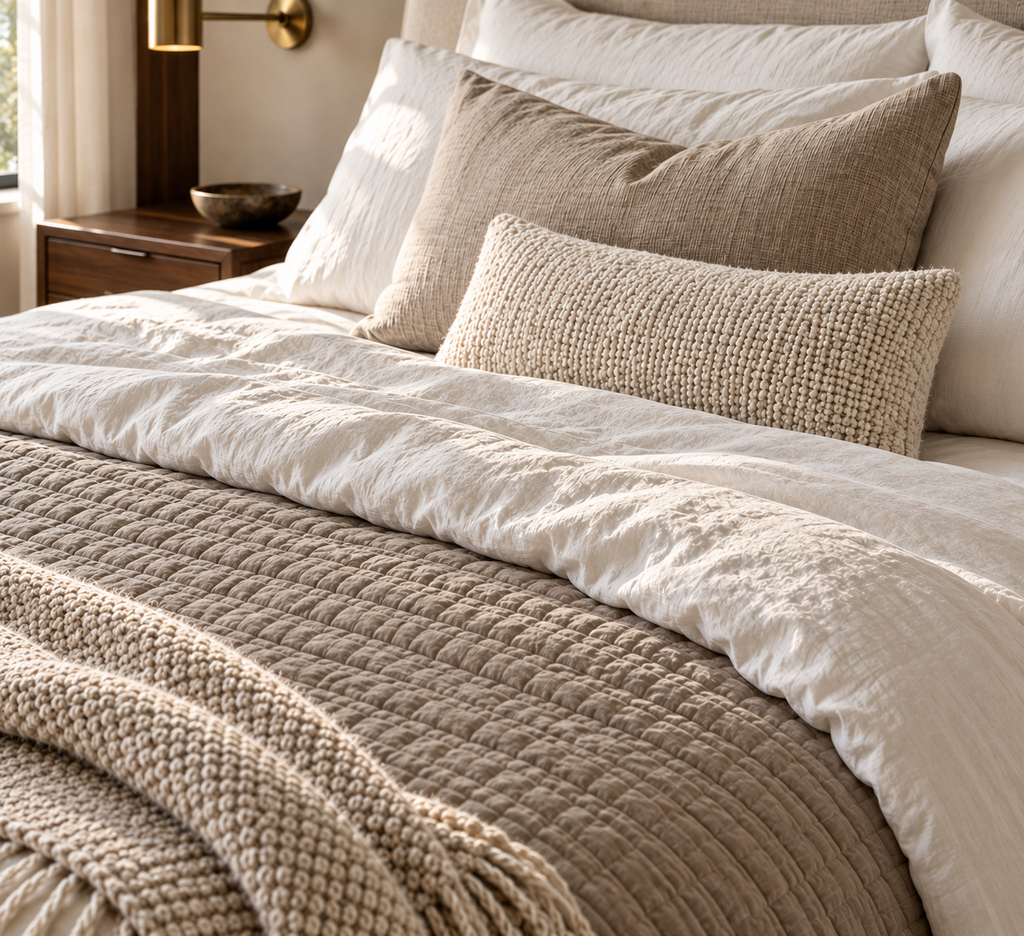
A cozy bed should look layered, but that doesn’t mean covering it with decorative pillows.
Start with the larger surfaces. Combine pieces that have noticeably different textures or weights, such as:
- smooth cotton or linen sheets
- a softly textured duvet
- a lightweight quilt or coverlet
- one tactile throw at the foot of the bed
- two or three decorative pillows rather than an entire row
The colors can stay close. Cream, ivory and oatmeal work together because the fabrics create separation.
If your bed currently looks flat, changing one large layer can have more impact than adding several small accessories.
Bedding
A Textured Quilt for Easy Layering
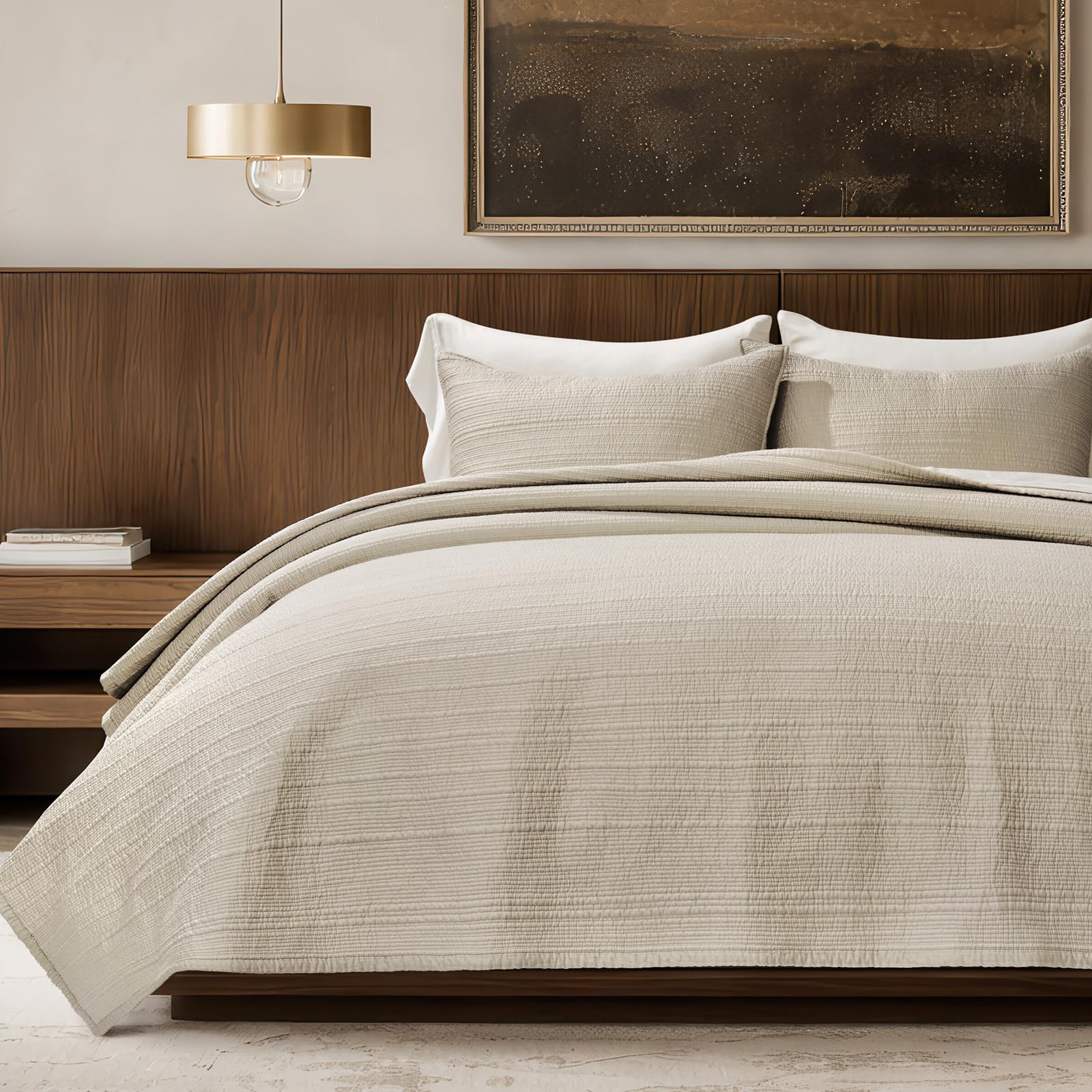
Subtle channel stitching gives this neutral cotton quilt enough texture to create another layer without making the bed feel busy.
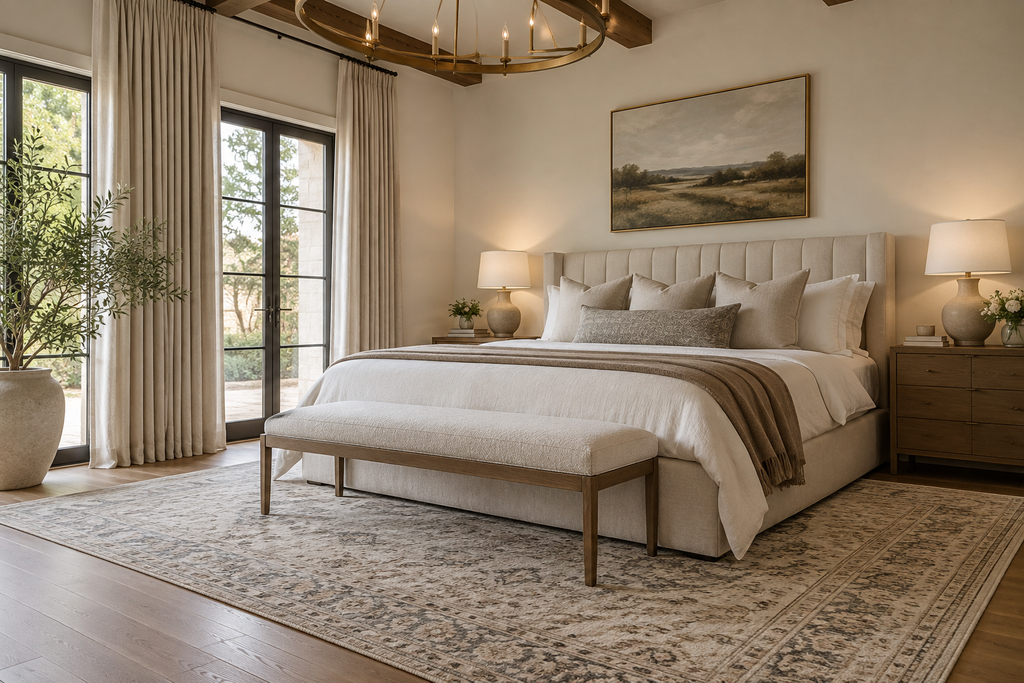
5. Ground the Bed With a Rug That Has Enough Presence
A bedroom rug should visually connect the bed and nearby furniture rather than look like a small island underneath them.
Before worrying about the exact shade, look at scale and visibility. Can you actually see enough of the rug around the bed for it to contribute to the composition? If only a narrow strip is visible, the rug may not be doing much visually.
For a neutral bedroom, subtle pattern can be more useful than another completely flat beige surface. Consider an ivory-and-taupe pattern, a muted vintage-style design or a textured wool-look rug.
The right size depends on the bed, room dimensions and placement, so measure your room and the area you want the rug to cover before ordering rather than choosing solely by bed size.
Rug
A Neutral Rug With Subtle Pattern
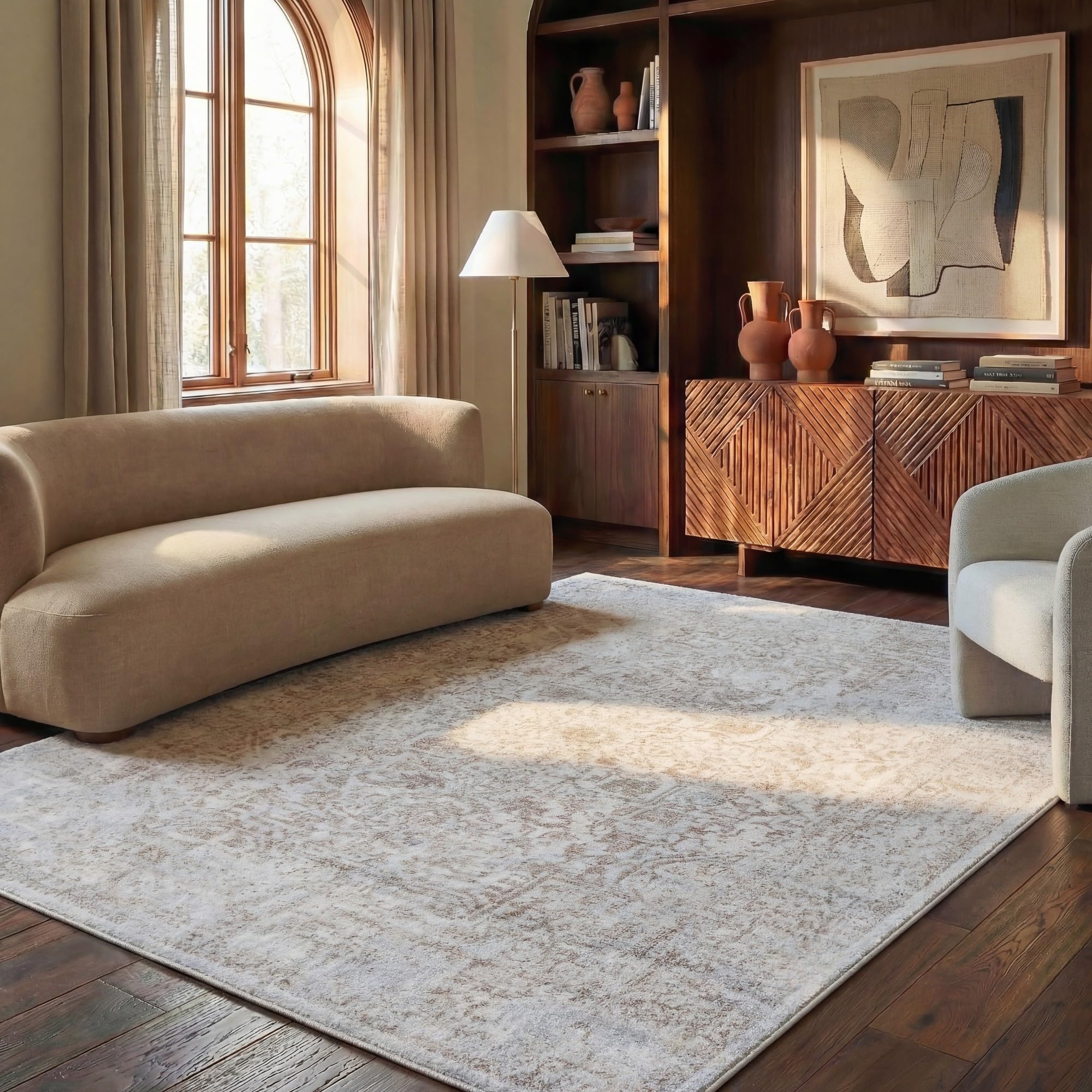
A soft ivory-and-taupe pattern adds depth to a neutral bedroom without competing with the bed or other furnishings.
6. Make the Bed or Headboard the Visual Anchor
If the room feels unfinished even after you’ve addressed the bedding and rug, look at the bed itself.
A substantial headboard gives the room a focal point and can balance a large blank wall. Upholstery adds a large area of soft texture, while a wood bed can provide useful contrast in a room dominated by pale fabric.
Choose based on what the room is missing.
Lots of wood already? An upholstered bed may create better balance.
Mostly pale upholstery and textiles? A wood bed may add more definition.
The goal isn’t to choose the most decorative headboard. It’s to give the largest piece in the room enough visual presence to anchor everything around it.
7. Mix Materials Instead of Matching Every Finish
When the color palette is restrained, materials become more important.
Instead of repeating the same linen-look fabric and wood finish everywhere, mix surfaces such as:
linen + wool + wood + ceramic + woven fiber + aged metal
You don’t need all six. Three or four clearly different materials are often enough.
Also watch repetition in furniture. If you already have walnut nightstands and a walnut dresser, adding a walnut bed, bench and mirror can make the room feel more like a matching set than a collected space.
Repeat finishes selectively rather than everywhere.
8. Use Lighting at More Than One Height
Many cozy neutral bedroom ideas focus on textiles, but lighting can also help a bedroom feel more layered visually.
Instead of relying only on a ceiling fixture, add light closer to the bed with table lamps or wall sconces. In a larger bedroom, a floor lamp can make sense beside a chair or reading area.
Pay attention to scale. Tiny lamps on substantial nightstands can make the furniture feel disproportionately heavy. The lamp should have enough presence to relate to the nightstand, headboard and artwork around it.
The fixture itself is another chance to introduce material contrast. Aged brass, warm ceramic, darker metal or a textured shade can break up a room filled with pale textiles.
Lamp
A Textured Ceramic Bedside Lamp
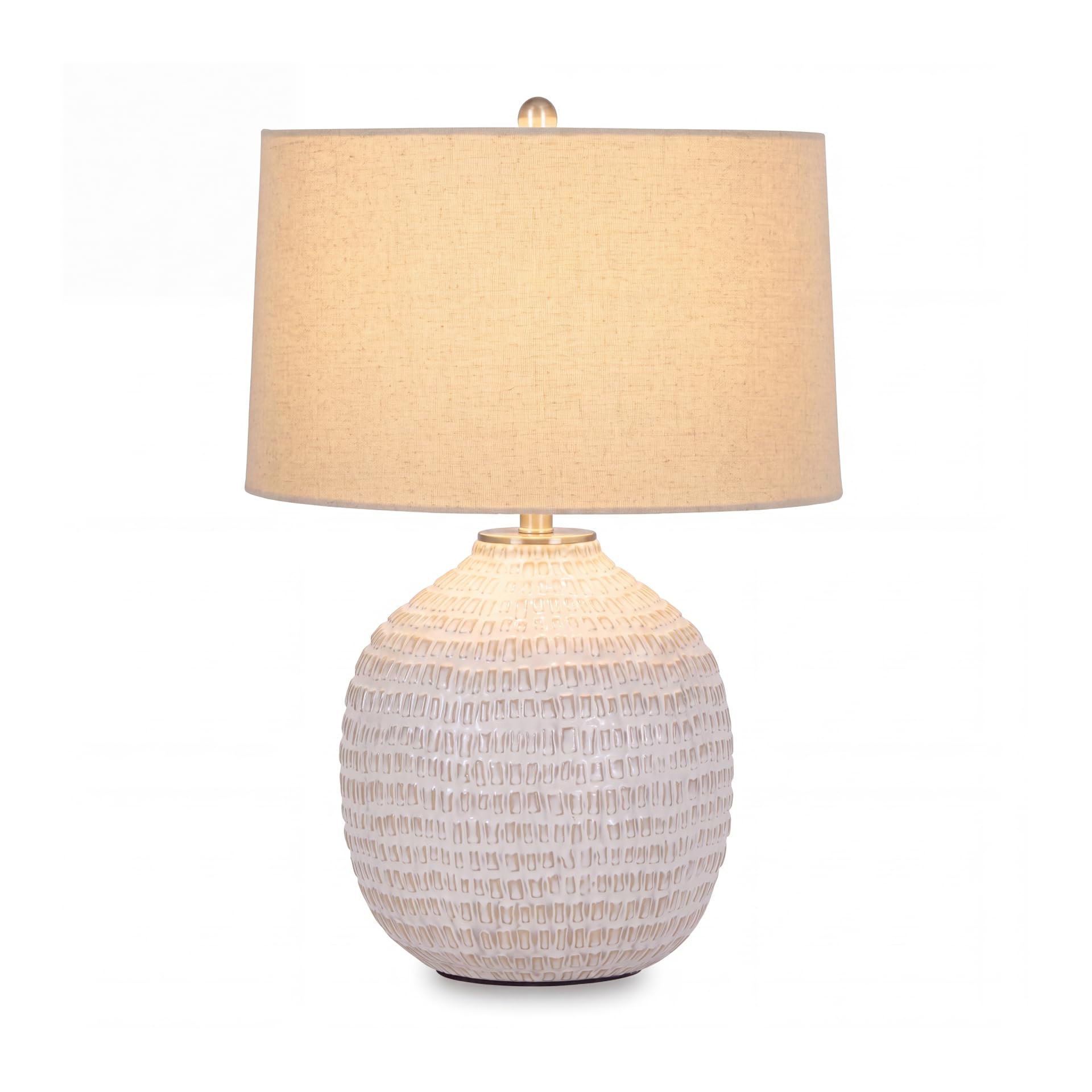
This substantial ceramic lamp adds bedside scale and texture while its neutral finish works easily with warm wood and pale bedding.
9. Soften the Room With Full-Length Curtains
Window treatments cover a large vertical area, so they can affect the room more than another pillow or decorative object.
Full-length curtains add fabric and soften the transition between the windows, walls and furniture. Warm white, ivory, oatmeal and mushroom are easy choices for a neutral palette, but the curtains don’t need to disappear into the wall.
A small tonal difference can create more depth.
If the walls and bedding are both very pale, mushroom or taupe curtains can add definition. If the room already contains several deeper elements, lighter curtains may create better balance.
Measure the window and wall before ordering so the finished treatment fits the actual space rather than relying on a generic bedroom recommendation.
10. Use Art to Add Character Without Adding Clutter
Neutral rooms don’t need neutral artwork everywhere.
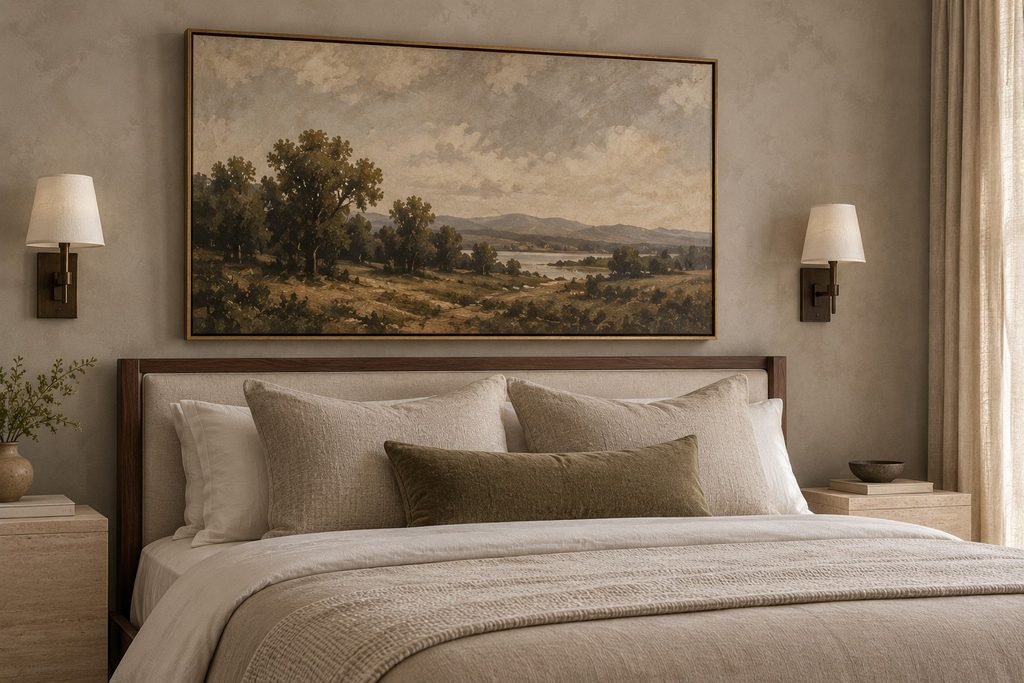
Art is one of the easiest places to introduce personality while keeping the overall room restrained. A charcoal sketch, muted landscape, vintage-style painting or abstract piece with brown, olive or rust undertones can add character without changing the entire palette.
Scale matters more than quantity.
One appropriately sized piece above a dresser or bed can look more intentional than several tiny frames scattered across the wall. And if another element already creates a strong focal point, don’t assume every empty wall needs art.
11. Style Nightstands With Restraint
Nightstands have to work, not just look styled.
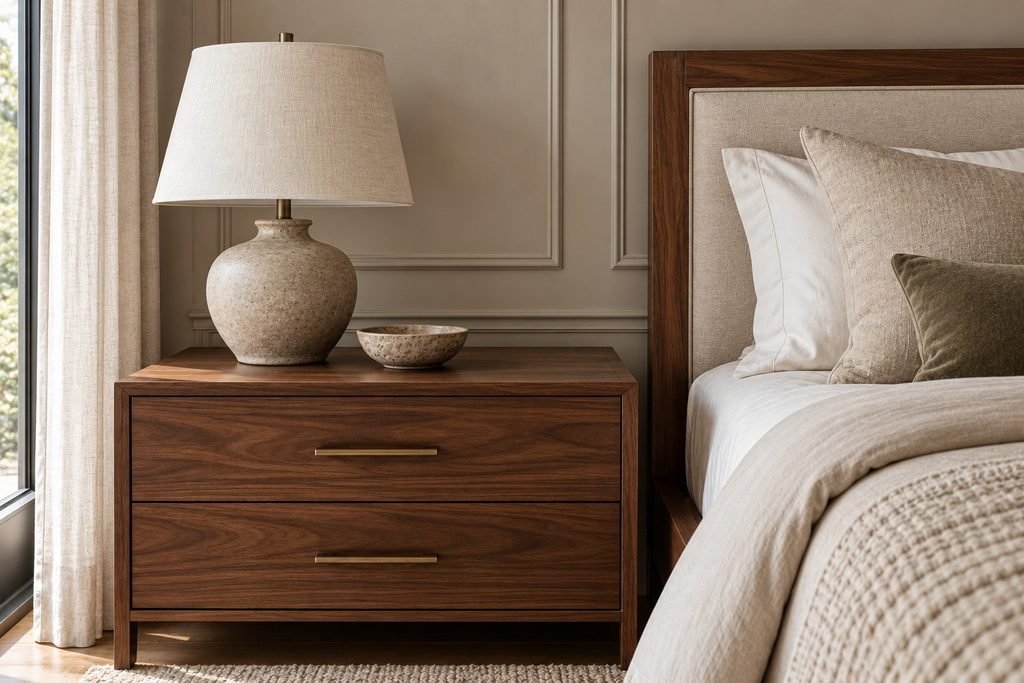
Start with what you actually use. That may be a lamp plus room for a phone, water or book. If there’s still enough clear surface, add one decorative element such as a small framed piece, ceramic object, dish or a short stack of books.
Avoid filling every gap with something small.
A substantial lamp plus one well-scaled object often looks more intentional than four or five tiny accessories—and leaves the surface usable.
12. Add a Bench or Stool Only if the Room Has Space
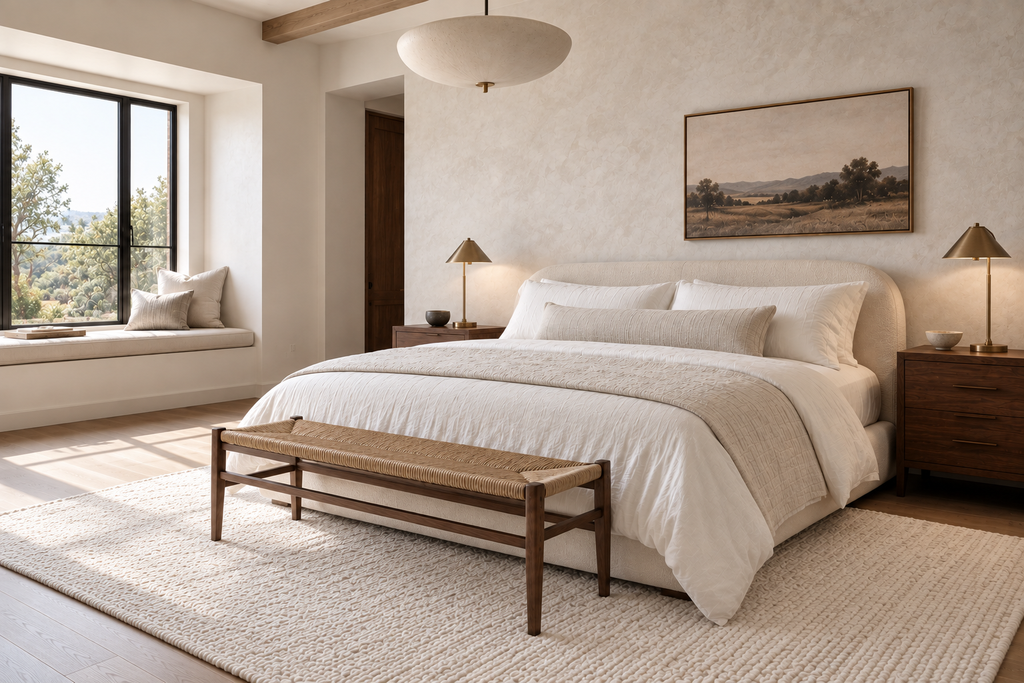
A bench at the foot of the bed can introduce another material and help fill a large bedroom, but it isn’t an essential part of a cozy room.
First check circulation. If the bench makes the walkway around the bed feel tight, the room will usually look better without it.
In a larger space, choose a material that adds something new. An upholstered bench can repeat a textile from the bed, while a wood bench provides stronger contrast.
For a smaller bedroom, a compact stool near a dresser or chair may accomplish the same thing without taking over the floor.
13. Repeat a Few Materials Across the Room
A cohesive room doesn’t require matching furniture. It needs a few visual connections.
If your nightstands are walnut, repeat a similar wood tone once elsewhere—perhaps in a frame, stool or bench. If the lamps have aged-brass bases, one additional brass detail may be enough to make that finish feel intentional.
The same principle works with color. Mushroom curtains could relate to one area of the rug or a pillow without being an exact match.
Think repetition, not duplication.
Two or three quiet connections around the room are usually more interesting than purchasing an entire matching collection.
14. Leave Some Visual Breathing Room
Not every empty surface is a decorating problem.
You don’t need an object on each dresser corner, artwork on every wall or pillows covering the entire bed. Clear surfaces and open wall space give the pieces you did choose more impact.
If your bedroom feels busy, remove something before you shop.
This is especially useful in a neutral room, where subtle differences in texture and material are easier to notice when they aren’t competing with dozens of accessories.
15. Add One Element With Personality
A neutral bedroom can be coordinated beautifully and still feel anonymous.
Add at least one piece that isn’t there simply because it “matches.”
It could be a vintage-style landscape, unusual lamp, sculptural ceramic piece, distinctive wood nightstand, patterned lumbar pillow or aged-looking frame. It doesn’t need to be colorful or expensive. It just needs enough character to keep the room from looking like a furniture showroom.
If the palette, bedding and furniture all work but the room still feels like something is missing, don’t automatically add another neutral accessory. Look for one memorable piece instead.
How to Make a Neutral Bedroom Cozier Without Redecorating Everything
You may not need a bedroom makeover at all.
Before shopping, work through the room in this order:
- Remove. Edit extra pillows, small accessories and anything that makes the room feel crowded.
- Rearrange. Check whether the bed, rug, artwork and nightstands feel connected and appropriately scaled.
- Relayer. Restyle bedding and textiles you already own. A quilt folded differently or a throw moved to the foot of the bed may reveal that you already have enough.
- Add contrast. Borrow a darker wood, brown textile, artwork or other deeper neutral from elsewhere in your home and see what changes.
- Replace selectively. Only after identifying what’s still missing should you buy something new.
If the room is pale and flat, another cream pillow probably won’t solve it. A stronger wood tone, more visible rug or appropriately scaled lamp may make a much bigger difference.
What Should You Buy First?
If you do decide to invest in the room, start with the piece that solves the biggest visual problem.
| If the problem is… | Consider first… | Why |
|---|---|---|
| The bed looks flat | Duvet, quilt or other substantial bedding layer | Changes a large visual area |
| The bed and furniture seem to float | Area rug | Helps connect the main furniture grouping |
| Everything is pale | Warm-wood or deeper-neutral piece | Creates needed contrast |
| The bed wall feels unfinished | Headboard or appropriately scaled artwork | Establishes a focal point |
| The room lacks visual depth around the bed | Bedside lamps or sconces | Adds another layer at eye level |
| The window looks bare | Full-length curtains | Adds softness across a large vertical surface |
| A large room feels sparse at the foot of the bed | Bench or stool | Adds function and another material layer |
This is also where I’d prioritize the budget. A rug, bed, nightstand or major bedding layer has much more visual influence than a collection of small decorative objects.
If the foundation isn’t working, don’t try to fix it with accessories.
A Few Pieces to Create the Look
If your bedroom still feels a little flat or unfinished, these four pieces can add texture, warmth, contrast and visual balance.
Textured Neutral Quilt
Adds an easy layer of texture.
Ivory & Taupe Rug
Adds subtle pattern and anchors the room.
Warm-Wood Nightstands
Adds warm contrast against pale finishes.
Textured Ceramic Bedside Lamp
Adds bedside scale and texture.
Create Warmth by Fixing What’s Missing
Before you add anything else to your bedroom, decide whether the room needs contrast, texture, warmth, scale, cohesion or personality.
Then address that one issue first.
Sometimes that means changing the rug or bedding. Sometimes it’s adding one warm wood piece. And sometimes the best improvement is simply taking a few things away.
The best cozy neutral bedroom ideas aren’t about fitting more neutral decor into the room. The goal is to make the pieces you already have—or carefully choose next—work together with enough variation to give the room depth and character.
If you want to carry the same warm, layered look into another room, explore these warm neutral living room ideas next.