

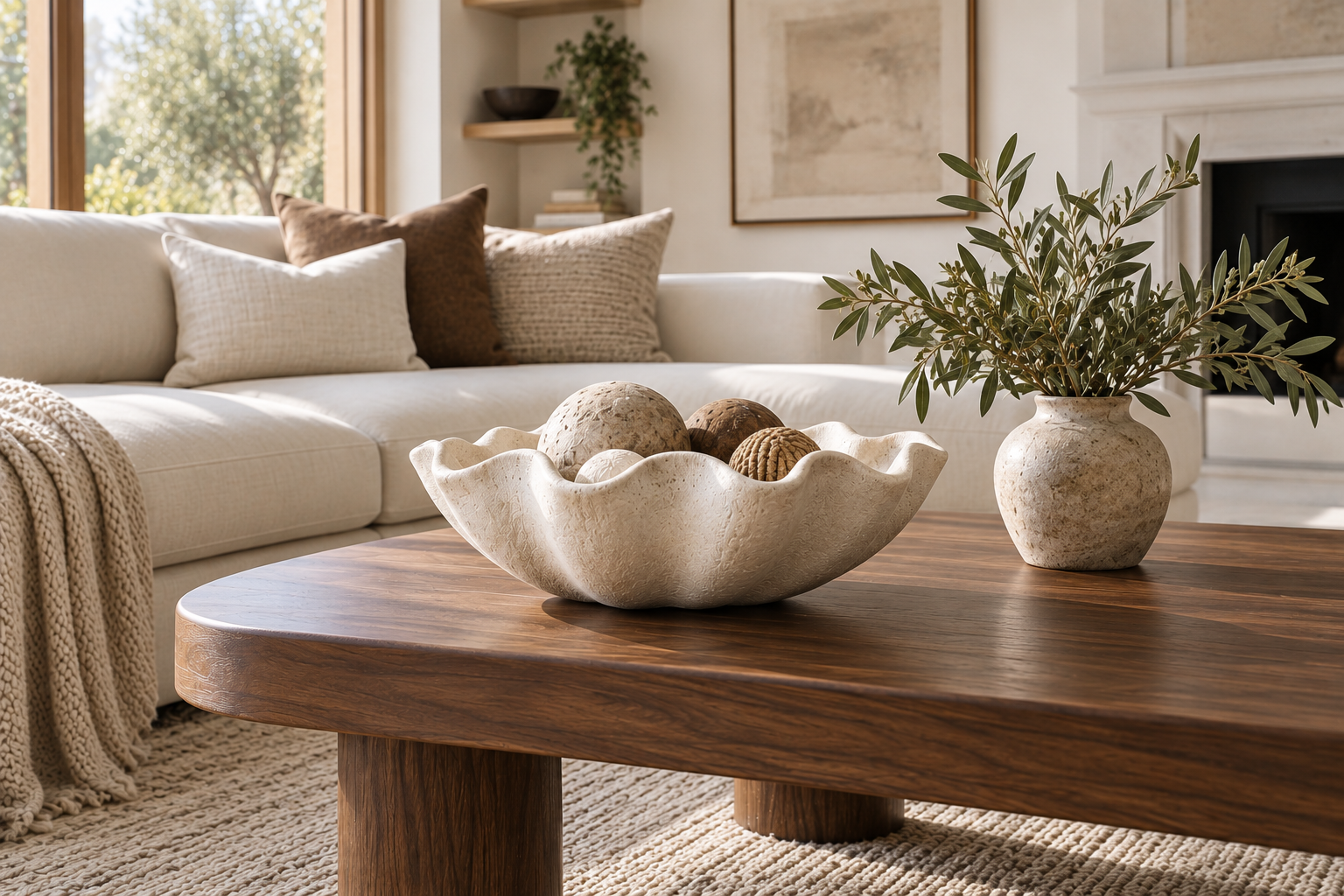
A decorative bowl can look beautiful on its own—or strangely unfinished once you set one on a coffee table or console. The difference usually isn’t how much you put inside it. It’s choosing the right role, scale, and material for the surface.
If you’re wondering how to style decorative bowls, start by deciding whether yours should be empty, filled, or functional. From there, a few simple choices can make it feel intentional without adding more clutter.
Affiliate disclosure: This post may contain affiliate links. I may earn a commission from qualifying purchases made through these links, at no additional cost to you. As an Amazon Associate I earn from qualifying purchases.
How to Style Decorative Bowls: Empty, Filled, or Functional
No—a decorative bowl does not need anything inside it. If its shape, texture, or material is interesting enough on its own, leaving it empty can actually give it more impact.
Before adding anything, decide what you want the bowl to do:
| Style it… | When it works best |
|---|---|
| Empty | The bowl has an interesting shape, texture, or material that can stand on its own |
| Filled | Simple contents add useful texture, color, or contrast |
| Functional | You need an attractive place to contain everyday items |
When you’re unsure, start empty. If the arrangement feels like it’s missing something, you can add one simple element rather than automatically filling the entire bowl.
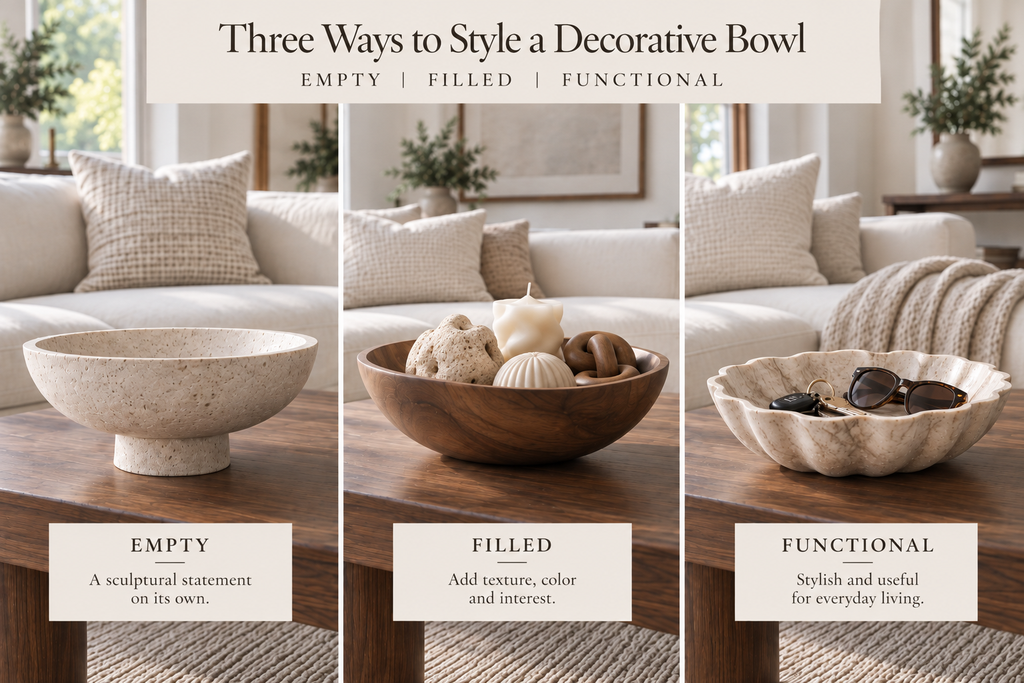
10 Easy Ways to Style Decorative Bowls
1. Let a Sculptural Bowl Stand Alone
Some bowls work better as sculptural objects than containers.
An organic-shaped ceramic bowl, substantial stone bowl, or carved wood piece already brings shape and texture to a surface. Instead of covering those details with filler, leave the bowl empty and give it enough open space to be noticed.
This works especially well in a warm-neutral room where subtle differences in shape and material do much of the decorating.
2. Give a Simple Bowl One Purpose
If your bowl is understated, decide what you want it to contribute before adding anything.
It might introduce a darker accent to a pale room, soften a table with lots of straight edges, add natural wood texture, or simply contain everyday objects.
That one decision makes it much easier to tell what—if anything—belongs inside.
3. Use a Bowl to Anchor Coffee Table Decor
A decorative bowl can give a coffee-table arrangement a focal point without requiring a collection of small accessories.
Try a low, substantial bowl with one taller element nearby while keeping part of the tabletop visible. On a walnut coffee table, a warm-white ceramic or lighter stone-look bowl creates enough contrast for the shape to stand out without feeling stark.
If the arrangement looks busy, remove a nearby accessory before adding filler to the bowl.
A Sculptural Bowl I’d Choose
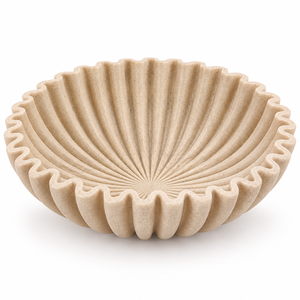
Sculptural Scalloped Decorative Bowl
The oversized scalloped shape adds texture and movement, while the warm stone-look finish makes it easy to style in a neutral room.
4. Turn a Small Bowl Into an Entryway Catchall
A decorative bowl can also solve an everyday problem.
On an entryway table, a smaller shallow bowl can create a designated place for keys, sunglasses, and other little essentials. Choose a finish that relates to the rest of the console—such as warm ceramic, wood, or stone—so the catchall still feels like part of the room.
For the rest of the console, see 12 Entryway Table Decor Ideas for a Warm, Elevated Look for ways to balance lighting, storage, and decor without overcrowding the surface.
5. Keep Fillers Simple
If you’re wondering what to put in a decorative bowl besides potpourri, you have plenty of options—but you don’t need many at once.
Depending on the room and bowl, try a restrained grouping of decorative beads, smooth sculptural objects, or a few natural elements such as dried seed pods. In a food-safe bowl, fruit can add useful color and function on a dining table or kitchen island.
The key is restraint. Leave some of the bowl itself visible instead of packing it to the rim.
And if none of those options improves the arrangement? Leave it empty.
6. Choose the Material Based on What the Room Needs
Rather than matching every finish, use the bowl to introduce something the room is missing.
- Wood can bring warmth and organic texture to cream, ivory, or stone surfaces.
- Ceramic works well when you want a softer, sculptural shape without much visual weight.
- Stone or stone-look finishes can give a pale or delicate arrangement a stronger visual anchor.
For a warm-neutral palette, combinations like walnut + warm-white ceramic, cream + medium wood, or ivory + muted brown stone create contrast without pushing the room back toward all beige.
A Warm Wood Bowl I’d Choose
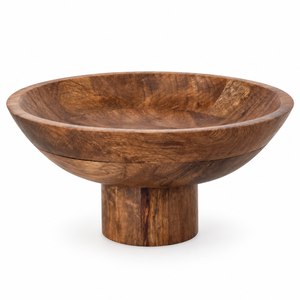
Walnut Wood Footed Bowl
The rich wood grain and simple footed shape add warmth and natural contrast to a coffee table, console, or shelf.
7. Use Contrast Instead of Matching Everything
If a bowl seems to disappear into the table, adding more decor may not fix it. The bowl and surface may simply be too similar.
Try a warm-white ceramic bowl on walnut, a medium wood bowl on pale stone, or a deeper brown bowl against cream or ivory.
You don’t need dramatic contrast. You just need enough difference in color, texture, or material for the bowl’s shape to register.
For more ways to layer warm neutrals without making a room feel flat, see 15 Warm Neutral Living Room Ideas for a Cozy, Layered Home
8. Check the Bowl’s Scale
A bowl that’s too small for the surface can look lost, while an oversized bowl can leave no room for the table to function.
There isn’t one measurement that works for every table. Instead, look at the bowl in relation to the whole surface, the furniture around it, and the other objects in the arrangement.
If you’re compensating for a tiny bowl by surrounding it with several small accessories, try removing those pieces and using one bowl with more visual presence. On a compact table, reverse the approach: use fewer objects so the bowl has room to breathe.
9. Leave Breathing Room Around It
One of the fastest ways to improve decorative bowl styling is simply to remove something.
A bowl surrounded by candles, books, beads, coasters, vases, and small objects can lose its shape completely. Keep some visible tabletop around it so the eye has somewhere to rest.
If the surface feels cluttered, remove the smallest accessories first. A bowl, one complementary object, and intentional empty space can be enough.
10. Know When a Tray Works Better
Bowls and trays solve different styling problems.
Choose a bowl when you want a curved, sculptural element or a contained place for loose items. Choose a tray when you want to group several separate objects—such as a candle, small vase, and decorative object—so they read as one arrangement.
If your main problem is too many small items scattered across a surface, a tray may be the better choice. If the surface needs one strong shape or a simple catchall, choose the bowl.
You usually don’t need both.
If Your Decorative Bowl Still Looks Wrong
Before buying another accessory, identify the problem first:
| If it looks… | Try this first |
|---|---|
| Lost | Choose a bowl with more scale or visual presence |
| Cluttered | Remove filler or nearby accessories |
| Flat | Introduce contrast in material, texture, or tone |
| Random | Give the bowl one clear decorative or functional purpose |
| Too busy | Empty the bowl and reassess |
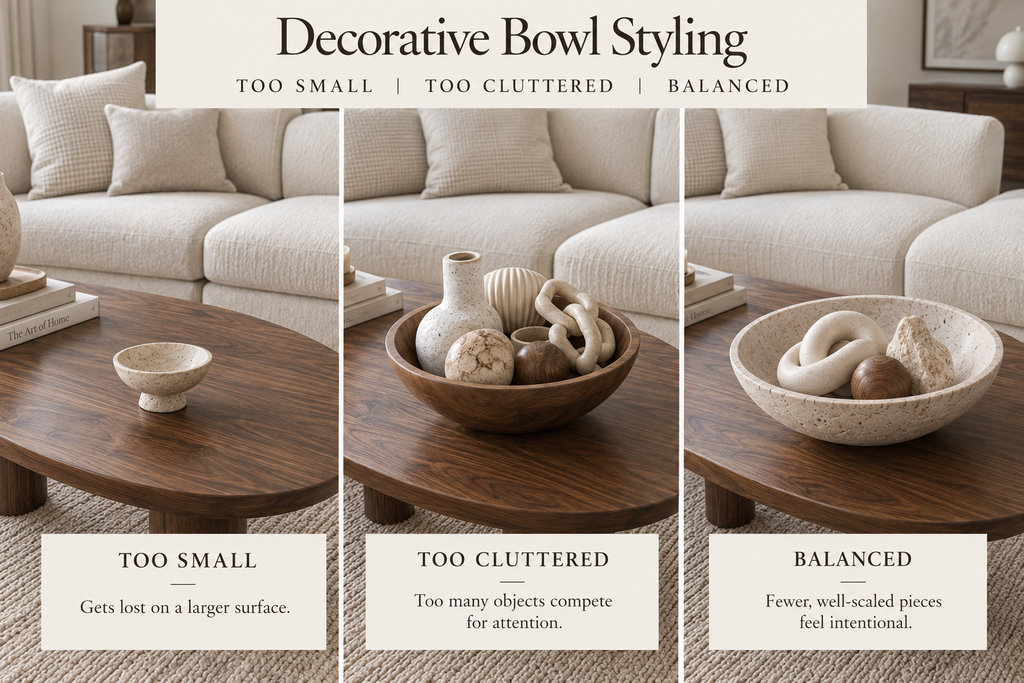
When deciding how to style decorative bowls, the easiest rule to remember is: don’t add something simply because the bowl is empty. Start with the surface, decide what role the bowl should play, and then add only what makes the arrangement better.
A beautiful bowl may need nothing at all. And when you do need one, choose a piece for its shape, scale, material, and usefulness rather than how much filler you can put inside it.
Want a Living Room That Feels More Finished?
Get my free Neutral Living Room Checklist with the key pieces that help a space feel warmer, more layered, and pulled together.
[…] nicely with taller books and vessels. If you have one you’re not sure what to do with, see How to Style Decorative Bowls: 10 Easy Ideas That Look Polished for a few simple ways to use […]
[…] If you already own a bowl but aren’t sure what to put in it—or whether to leave it empty—see How to Style Decorative Bowls: 10 Easy Ideas That Look Polished. […]