

Affiliate disclosure: This post may contain affiliate links. I may earn a commission from qualifying purchases made through these links, at no additional cost to you. As an Amazon Associate I earn from qualifying purchases.
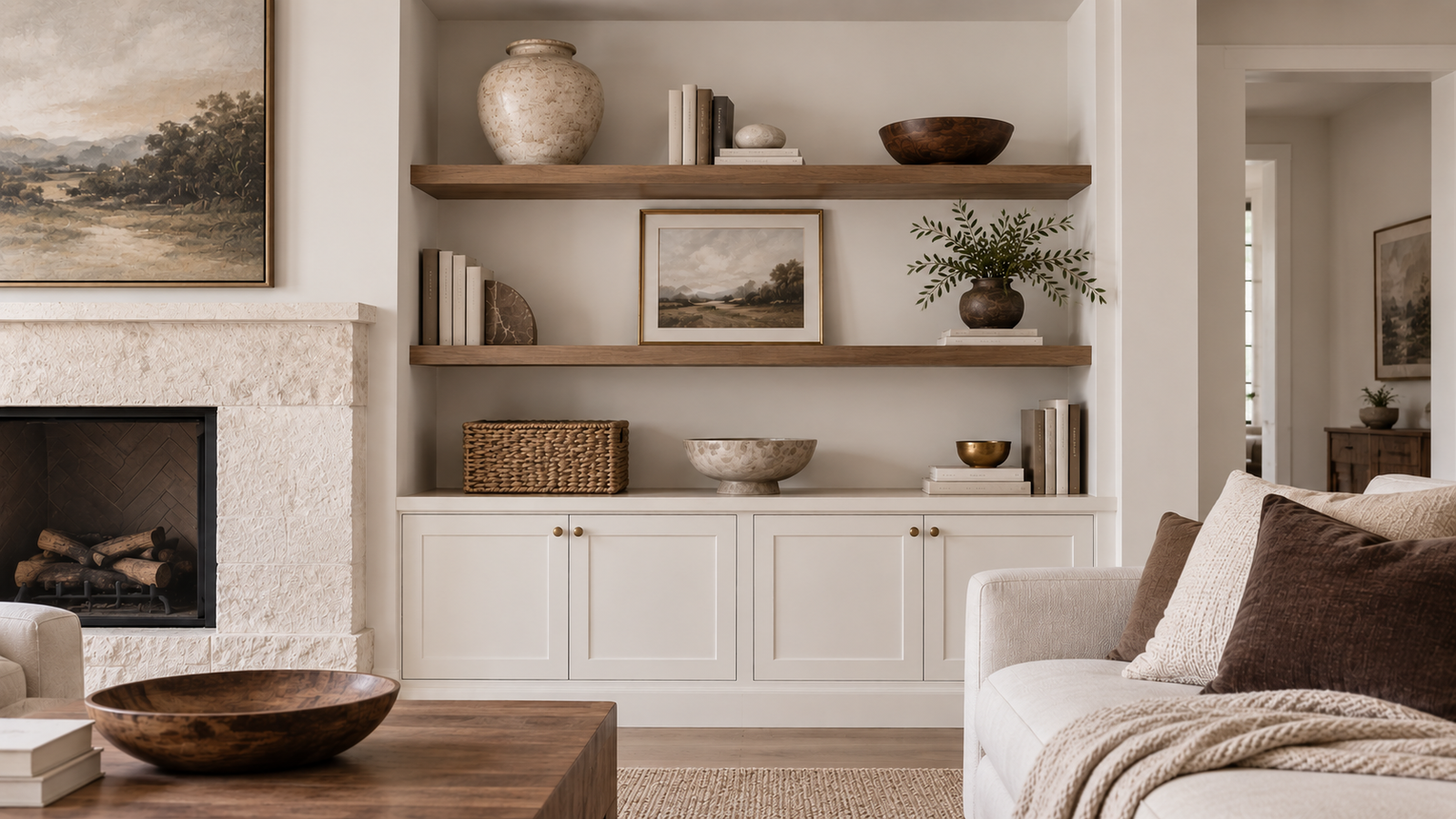
Built-in shelves can give a living room character, storage and architectural interest—but they can also start to feel cluttered surprisingly quickly.
Usually, the problem isn’t that you need better decor. It’s that the scale, quantity or placement of what you already have isn’t working together.
If you’re wondering how to style built-in shelves so they feel collected rather than cluttered, start by editing before you add anything new. A few larger pieces, intentional variation and more breathing room can make a bigger difference than filling every shelf.
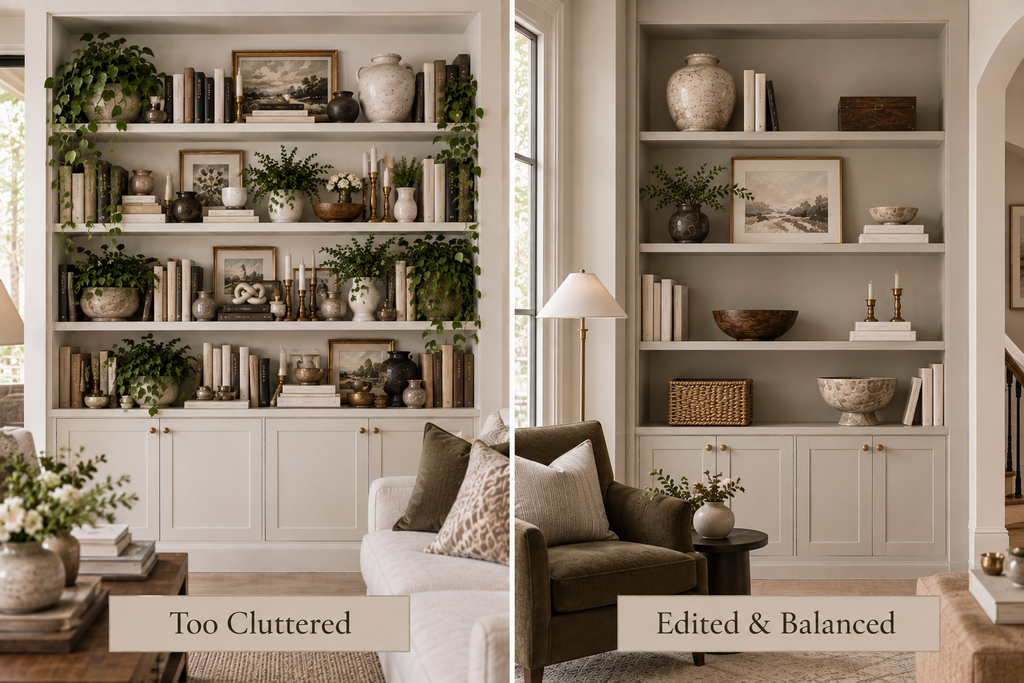
Why Do Built-In Shelves Look Cluttered?
When built-ins don’t look quite right, I would check these four things first:
| Problem | What You May Notice | Try This First |
|---|---|---|
| Too Small | Lots of little accessories with nothing to anchor them | Replace several small pieces with one larger object |
| Too Many | Nearly every shelf and open space is filled | Remove a few pieces and reassess |
| Too Similar | Everything is a similar height, shape or material | Introduce controlled variation |
| No Breathing Room | Individual objects get lost in the overall display | Leave intentional open space around key pieces |
You don’t necessarily need to fix all four. Identifying the one making your shelves feel off can make the rest of the styling process much easier.
How to Style Built-In Shelves in 7 Steps
1. Clear the Shelves and Shop What You Already Own
Before buying anything, take most—or all—of the decor off your shelves.
Then gather pieces you already own that could work: books, ceramic vessels, decorative bowls, small artwork, framed photos, baskets and meaningful objects.
Seeing everything together makes it easier to notice what you have too much of and what’s missing. You may discover that you don’t need more decor at all—you simply need to use fewer pieces.
As you sort, look for items with enough size or visual weight to become anchors. Set tiny accessories aside for now. You can bring a few back later if the arrangement needs them.
2. Start With Fewer, Larger Anchor Pieces
One of the easiest ways to make built-ins look cluttered is to style them with too many small accessories.
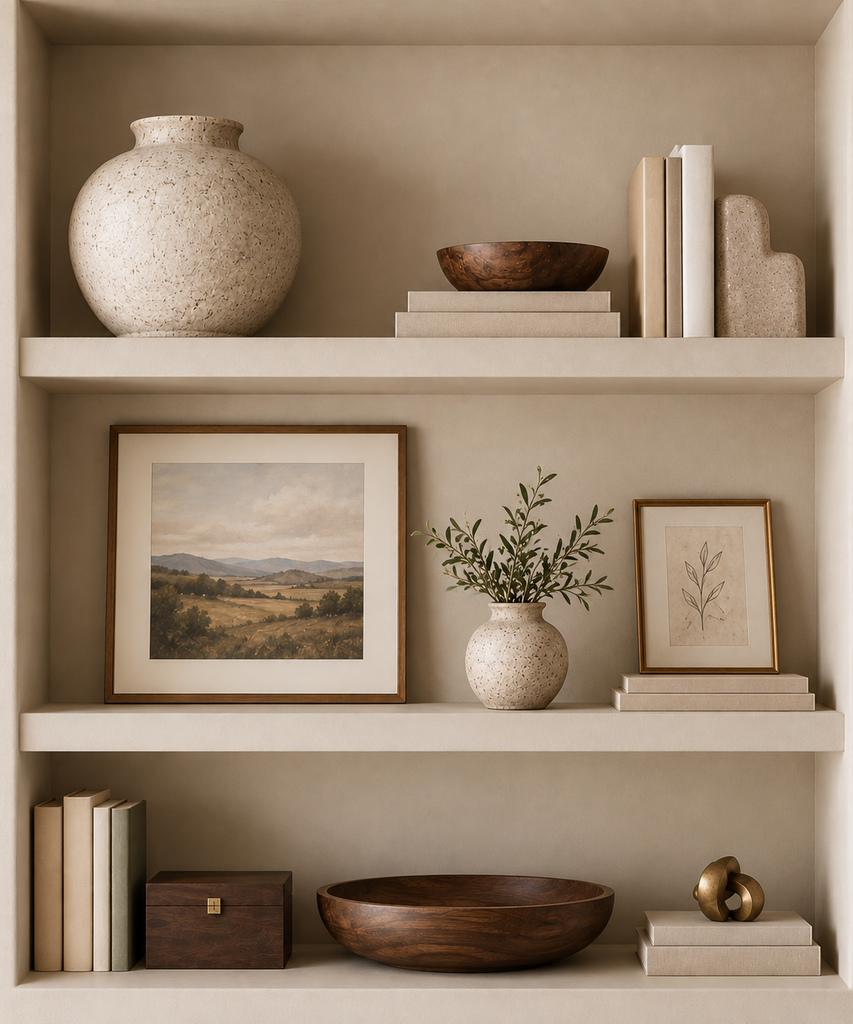
Start with your larger pieces instead. A substantial ceramic vessel, a piece of art, a wide decorative bowl or a meaningful stack of books gives the eye somewhere to land.
That doesn’t mean every shelf needs a large object. Instead, distribute a few stronger pieces throughout the built-ins and let smaller items support them.
For a warm, elevated look, I like a substantial cream or warm-white ceramic vessel with a simple silhouette. It adds shape and contrast without introducing another busy pattern.
A Sculptural Ceramic Vessel I’d Choose
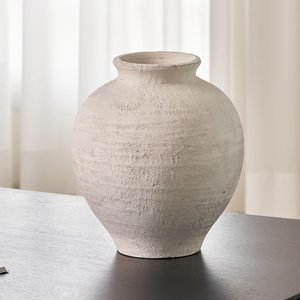
Look for a vessel with enough height and visual weight to hold its own on the shelf rather than disappearing among smaller accessories.
3. Mix Books With Decorative Objects
Books are useful for breaking up a display that otherwise feels like a row of decorative accessories.
Try some books vertically and others in short horizontal stacks. A small bowl or sculptural object can sit beside a stack, while bookends can give a vertical group a more finished look.
The key is not to repeat the exact same arrangement on every shelf. If every section has three books topped with an object, the shelves can begin to feel staged rather than collected.
Books also give you an easy way to introduce color. If your room is mostly warm neutral, covers in cream, muted brown, olive, charcoal or other subdued tones can add variation without overwhelming the palette.
4. Vary Height, Shape and Material—Then Repeat a Few Elements
Built-ins tend to look flat when everything is approximately the same height or made from the same material. But using completely unrelated pieces can create the opposite problem.
The goal is variation with a little repetition.
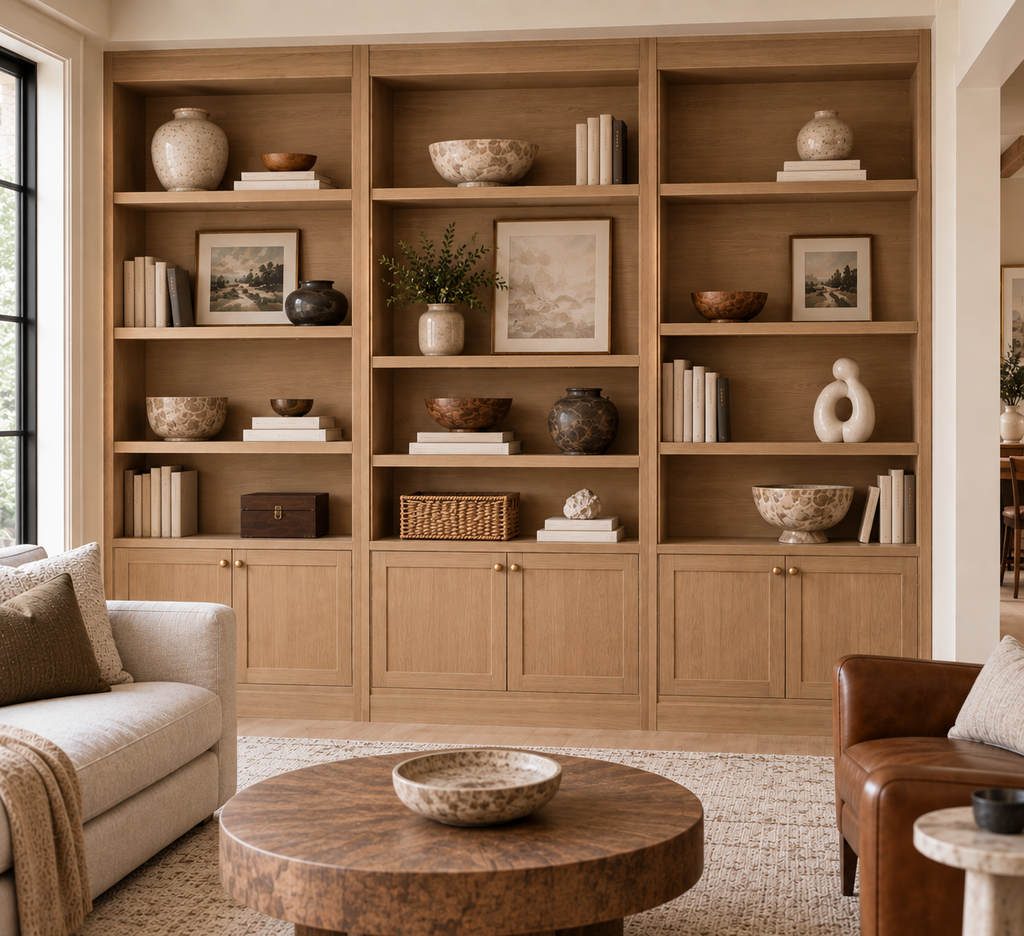
For example, you might combine warm-white ceramic, medium walnut or another warm wood, woven texture, stone, a restrained aged-brass accent, books and framed artwork.
Then repeat two or three of those materials or colors elsewhere on the shelves.
You don’t need matching objects. A cream ceramic bowl on one shelf and a cream vessel several shelves away can be enough to create a visual connection.
This same approach works throughout a room. If you’re trying to create a softer, layered palette beyond the built-ins, see my 15 Warm Neutral Living Room Ideas for a Cozy, Layered Home
5. Add Personal Pieces Without Filling Every Shelf
Built-ins should still look like they belong to the people who live there.
Family photos, a small piece of art, an object from a trip or something passed down through your family can make shelves more interesting than a display made entirely from newly purchased decor.
The trick is giving those pieces enough room to be noticed.
Instead of grouping several small sentimental objects together, choose one or two favorites and pair them with simpler pieces. A framed photo beside a stack of books or a meaningful object next to a ceramic bowl can feel intentional without becoming busy.
Decorative bowls are especially useful because they add a low, sculptural shape that contrasts nicely with taller books and vessels. If you have one you’re not sure what to do with, see How to Style Decorative Bowls: 10 Easy Ideas That Look Polished for a few simple ways to use it.
6. Leave Some Space Intentionally Empty
Empty space is part of the arrangement.
You don’t need an accessory in every opening, and you don’t need to fill every inch of a long shelf. Leaving a little space around an object makes its shape easier to see and gives the entire display room to breathe.
If your shelves still feel cluttered after you’ve styled them, try removing one item from each busy section.
Then walk across the room and look again.
Often, the arrangement doesn’t need something added—it needs something taken away.
This is especially helpful with open living-room built-ins, where you’re viewing several shelves at once. The entire wall should feel balanced from a distance before you worry about perfecting each individual shelf.
7. Step Back and Balance the Built-Ins as a Whole
Once you know how to style built-in shelves individually, stop looking at them one shelf at a time and consider the built-ins as a whole.
Stand across the room and look at the entire built-in.
Are all of the tallest objects on one side? Is one section noticeably darker or busier? Are your baskets, books or ceramic pieces repeating in a way that feels too symmetrical?
Move pieces between shelves until the visual weight feels distributed across the whole unit.
You don’t need both sides to match. In fact, slight asymmetry often makes built-ins feel more natural and collected.
A tall vessel on the upper left might be balanced by artwork or a darker grouping lower on the right. The goal is visual balance—not a mirror image.
What Should You Put on Built-In Shelves?
You don’t need every type of decor on this list, but these pieces tend to work well together:
- Books
- Ceramic vessels
- Decorative bowls
- Small framed artwork
- Personal photographs
- Baskets or boxes
- Sculptural objects
- Natural wood or stone accents
- One or two restrained metal accents
Choose fewer pieces with enough presence to be noticed rather than collecting lots of small accessories simply to fill space.
Styling is only one part of creating a balanced living room. If the room itself still feels off, my sectional sofa layout ideas can help you work through furniture placement, walkways and visual balance.
The Simplest Built-In Shelf Styling Formula
When you’re stuck, keep the formula simple:
Anchor + variation + repetition + personal detail + breathing room
Start with a few substantial pieces. Vary the heights and shapes. Repeat a small number of colors or materials. Add something personal. Then stop before every open space is filled.
The finished shelves shouldn’t look like you styled every inch of them. They should look like the pieces were collected over time—and just happen to work beautifully together.
Want Your Whole Living Room to Feel More Finished?
Built-ins are only one piece of the room. If your living room still feels like it’s missing something, my free Neutral Living Room Checklist walks you through the details that can help a space feel more layered, cohesive and complete.