

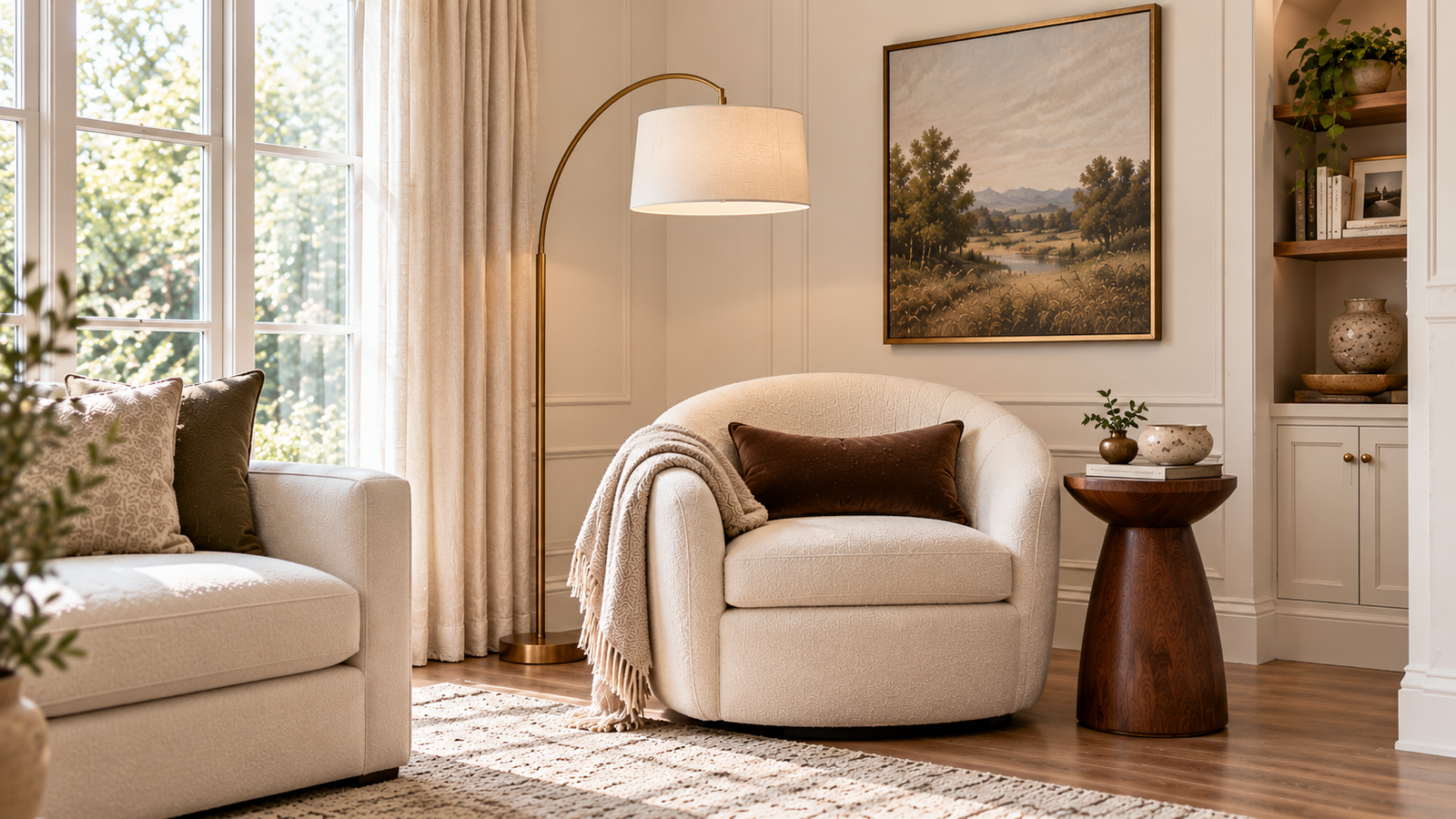
An empty living room corner can make an otherwise pulled-together space feel unfinished. But adding the wrong chair, table, or shelf can make the room feel crowded instead.
The best empty living room corner ideas depend on your available space, furniture layout, and what the room actually needs. Sometimes that’s extra seating or storage. Other times, a single lamp or piece of artwork is enough.
Here are ten ways to make an awkward corner look intentional, plus how to choose the right solution for your room.
This post contains affiliate links. I may earn a commission from qualifying purchases at no additional cost to you. As an Amazon Associate I earn from qualifying purchases.
What Should You Put in an Empty Living Room Corner?
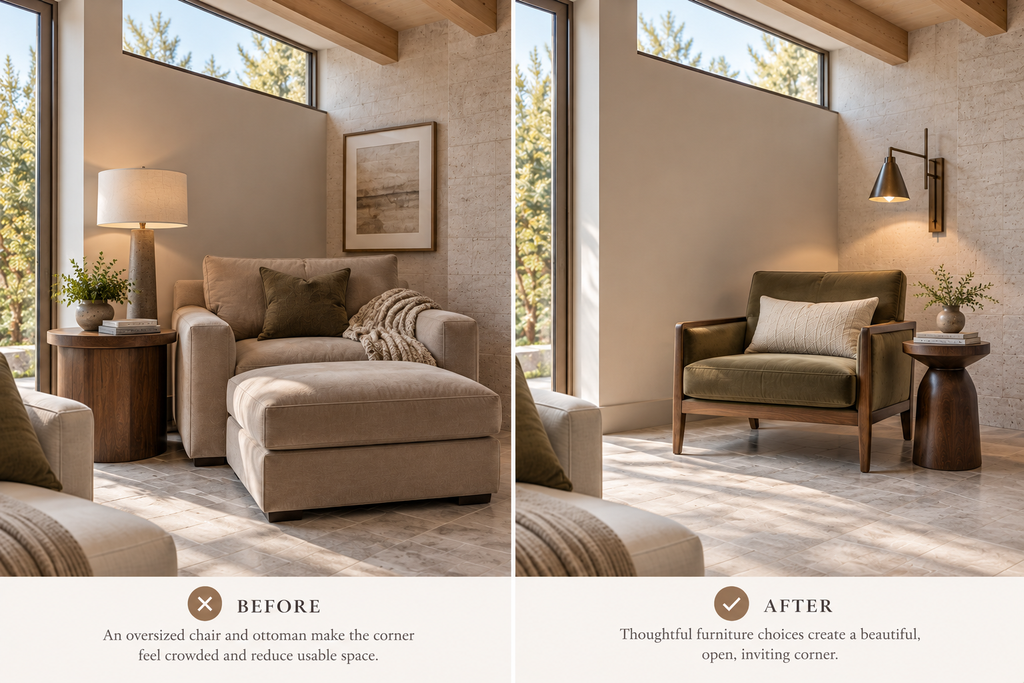
Start with the corner’s size and purpose. A deep corner might accommodate a reading chair, while a narrow space beside a sofa may only need a floor lamp.
| Your Corner | What Works Well | What to Avoid |
|---|---|---|
| Narrow or shallow | Slim lamp or wall art | Deep accent chair |
| Deep and open | Reading chair with small table | Tiny, isolated accessories |
| Dark | Floor lamp or artwork | Light-loving plants |
| Beside a sofa | Side table or compact lamp | Blocking access to seating |
| Needs storage | Narrow closed cabinet | Oversized shelving |
| Near a walkway | Wall art or open space | Bulky floor furniture |
Before buying, measure the width and depth of the corner, then account for walking space. Use painter’s tape to outline the furniture’s full footprint on the floor. Check that doors open, curtains move freely, and you can comfortably walk around the arrangement.
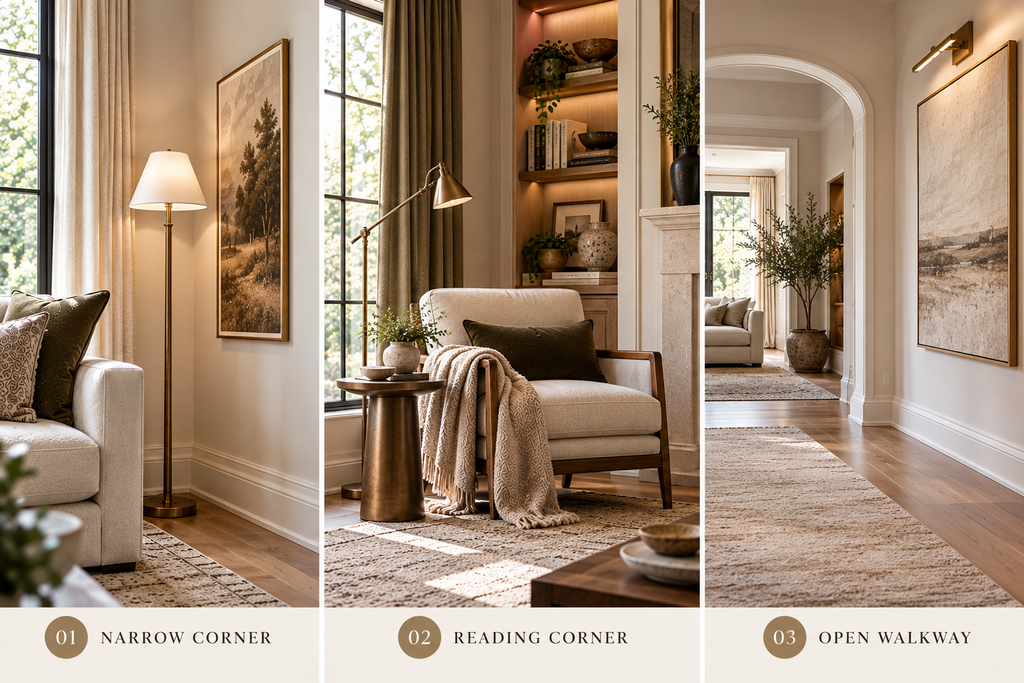
10 Empty Living Room Corner Ideas That Look Beautiful
1. Create a Cozy Reading Nook
A reading nook works beautifully in a deeper corner that has enough space for a chair without interrupting the room’s flow.
Start with an upholstered accent chair in oatmeal, warm ivory, or mushroom taupe. Pair it with a compact walnut side table and a reading lamp.
For a cream sofa, a mushroom-colored chair adds subtle contrast while keeping the palette soft. Repeat the walnut finish elsewhere in the room so the corner feels connected.
Best for: Larger corners where extra seating would actually be useful.
Before purchasing, check the chair’s width and depth, then allow space to sit down and get up comfortably. A compact chair is often more practical than an oversized swivel style.
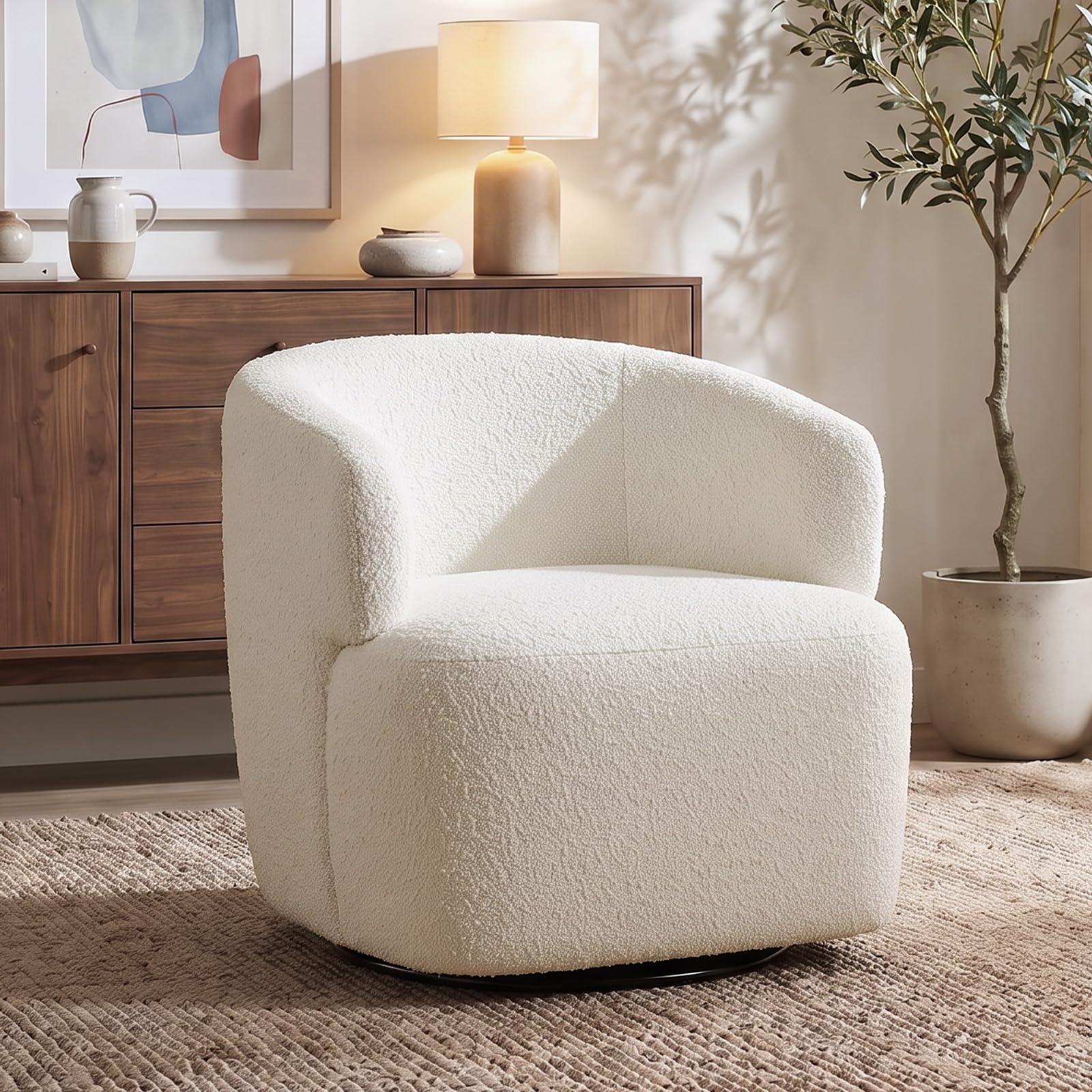
Swivel Accent Chair — Cozy Reading Nook
For a cozy reading nook, consider this upholstered swivel accent chair. Its swivel design makes it easy to turn toward the conversation area while still creating a comfortable spot to relax.
2. Add a Tall Tree or Statement Greenery
If your corner needs height rather than furniture, try a tall tree.
A faux olive tree in a textured planter adds an organic shape that contrasts with straight walls and rectangular furniture. Its muted green foliage also pairs naturally with cream upholstery and walnut wood.
Choose a height that suits the room. A tiny plant may look lost in a tall corner, while an oversized tree can overwhelm a nearby sofa.
Best for: Visually empty corners that don’t need seating or storage.
For live greenery, consider the available light and any pets in the home. A faux tree is an alternative when the location isn’t suitable for a living plant.
Faux Olive Tree — Empty Corner Greenery
If you love the look of greenery without the maintenance, this faux olive tree is a beautiful option for adding height and soft, natural texture to an empty corner.

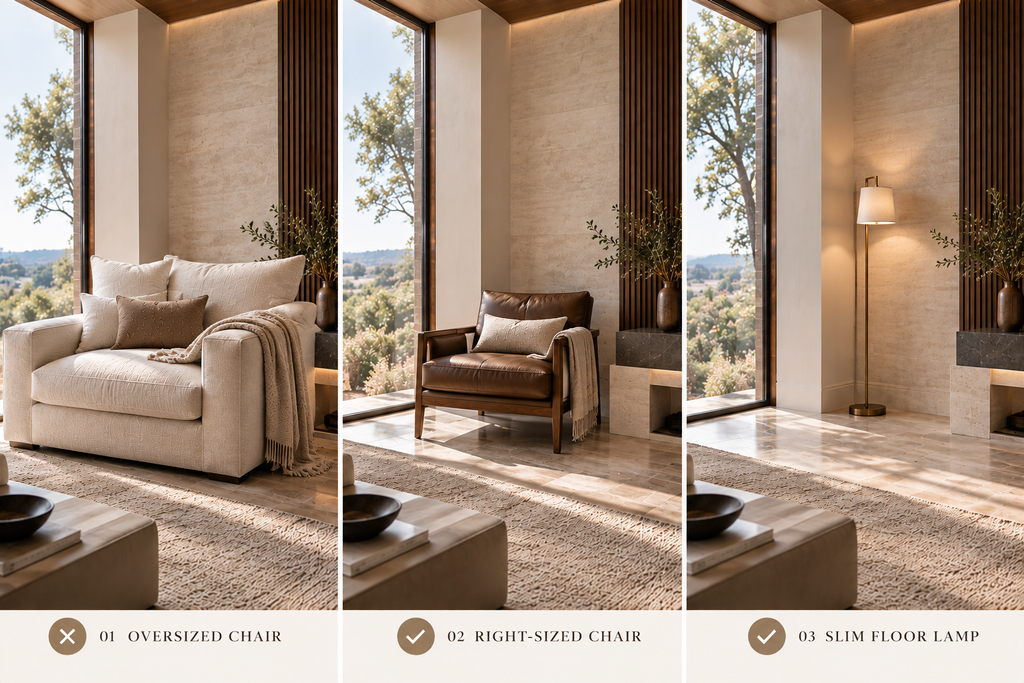
3. Use a Slim Floor Lamp
A floor lamp is one of the most useful solutions for a narrow living room corner.
An aged-brass reading lamp adds warmth without taking up much visual space. A walnut lamp with a linen shade works well when you want softer ambient lighting.
Choose the style based on what the light needs to do. An adjustable lamp can illuminate a chair or sofa, while a shaded lamp can contribute to the room’s overall evening lighting.
Best for: Narrow corners, darker seating areas, and spaces beside sectionals.
Check the base diameter, overall height, and cord placement before buying. A lamp that looks slim in a product photo may still have a wide base.
See 4 Best Floor Lamps for Sectional Sofas (And Where to Place Them) for more placement guidance.
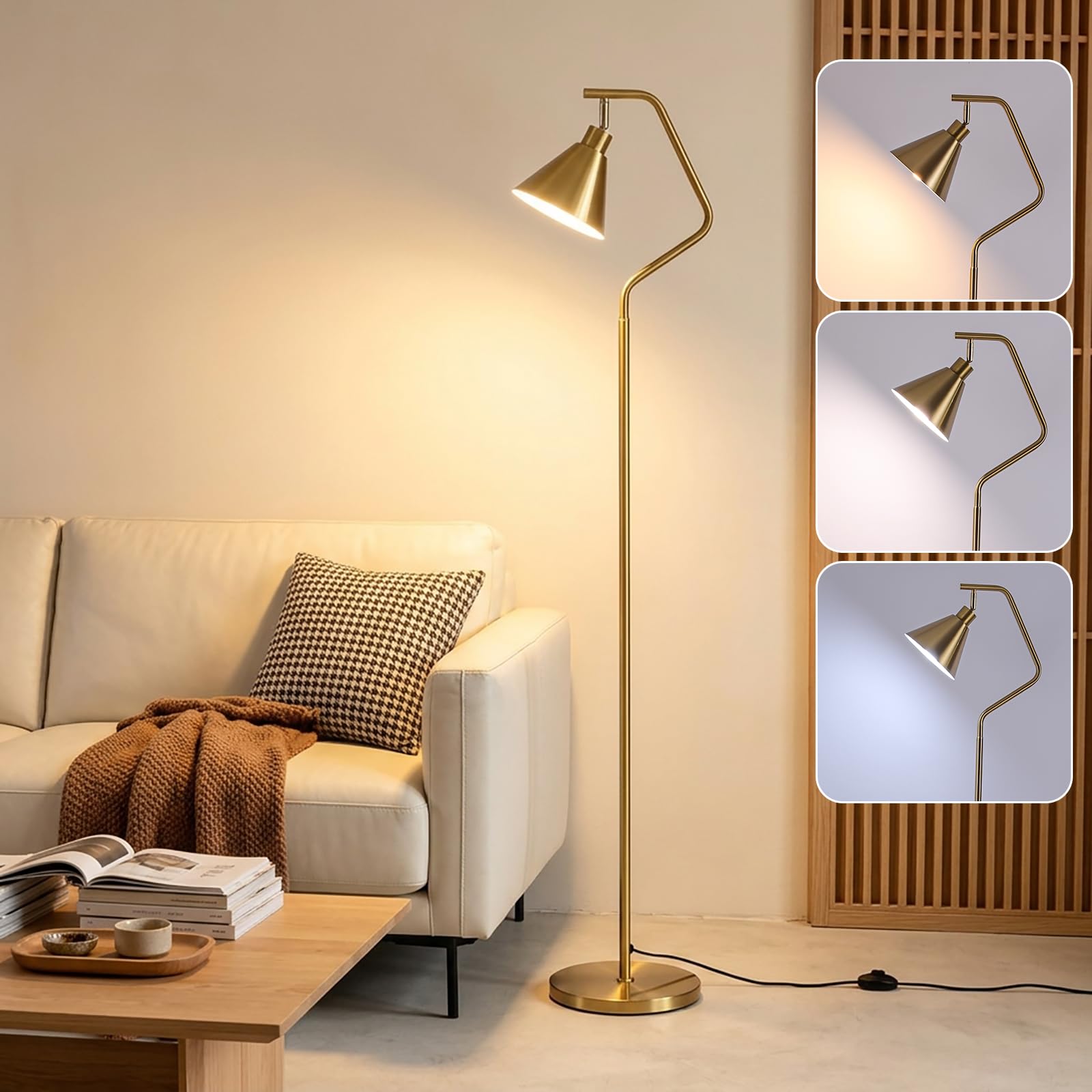
Slim Brass Reading Floor Lamp
This slim brass floor lamp is a stylish choice for a narrow living room corner. Its angled arm and downward-facing shade provide focused lighting beside a sofa or reading chair, while the slender design keeps the space feeling open.
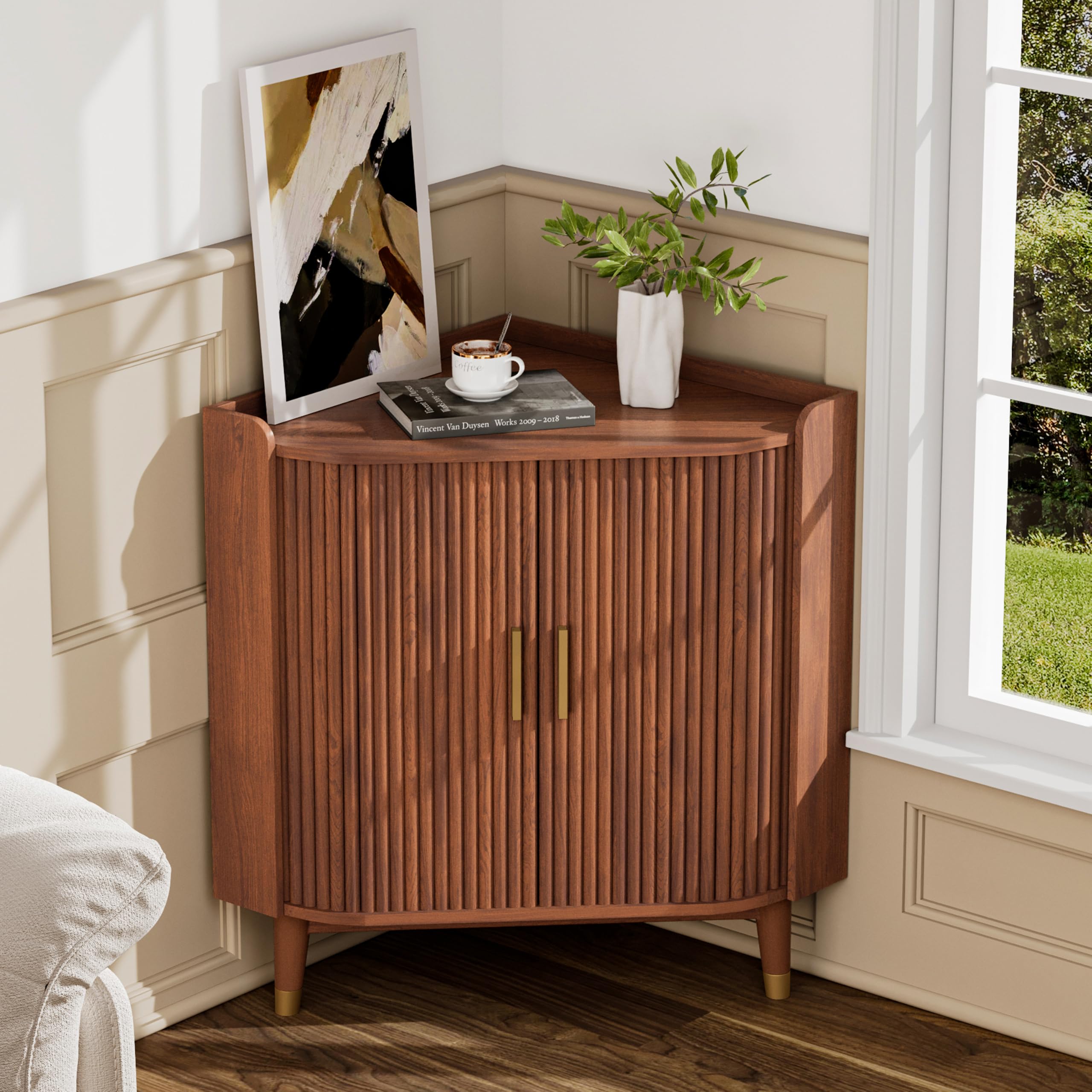
4. Add a Narrow Storage Cabinet
An empty corner can become useful storage without looking like an afterthought.
Choose a narrow cabinet with doors to conceal games, electronics, or everyday clutter. Natural oak or walnut finishes help it blend with other living room furniture.
Keep the top simple: one ceramic lamp or a small arrangement of books and a bowl is usually enough.
Best for: Corners that need practical storage and have room for cabinet doors to open.
Check the cabinet’s depth and installation requirements. Tall or unstable furniture may require wall anchoring, particularly in homes with children.
Narrow Walnut Storage Cabinet
This walnut cabinet offers concealed storage in a compact footprint, making it worth considering for a corner where you want both function and a furniture-like finish.
5. Style a Small Accent Table
A small accent table can create a finished-looking corner without requiring another chair.
Try a round walnut table with a ceramic lamp and one decorative bowl. The lamp adds height, while the table gives the arrangement a clear purpose.
Avoid placing a tiny table alone in a large corner. Without artwork, lighting, or another taller element, it may make the empty space more noticeable.
Best for: Medium-sized corners that need a decorative focal point rather than extra seating.
For simple styling combinations, see How to Style Decorative Bowls: 10 Easy Ideas That Look Polished.
6. Decorate the Walls Instead of the Floor
If the corner is close to a walkway, skip the furniture and focus on the walls.
One vertical landscape print can add interest without taking up floor space. Choose artwork that repeats colors already in the room, such as soft olive, taupe, cream, or warm brown.
A natural oak or walnut frame can connect the artwork to your furniture.
Best for: Tight corners and rooms that already have enough furniture.
For a clean look, start with one appropriately sized piece rather than filling both walls with small, unrelated prints.
7. Use a Floor Mirror Strategically
A floor mirror can make a plain corner more interesting, especially when it reflects a window or an attractive part of the room. Also consider how sunlight and lamps will reflect in the mirror throughout the day. A beautiful reflection isn’t helpful if it creates glare from your favorite seat.
Choose a frame that complements your existing finishes. A warm wood frame feels softer, while a narrow dark frame introduces contrast.
Before deciding on placement, stand where you normally sit and consider what the mirror will reflect. A view of clutter or a busy doorway may not improve the room.
Best for: Corners with a useful reflection and enough room for secure installation.
Follow the manufacturer’s mounting or anti-tip instructions. If a floor mirror isn’t practical, consider a wall-mounted mirror instead.
8. Solve the Corner Beside Your Sofa
The space beside a sofa often feels awkward because it’s part of the seating arrangement rather than a separate decorating area.
Choose the solution based on what’s missing.
If you need somewhere to set a drink, try a small side table. If the sofa needs better lighting, use a floor lamp. If the corner is generous and you need another seat, consider a compact chair.
For a cream sofa, a walnut side table and aged-brass lamp create a warm combination without introducing several new colors.
Best for: Corners beside sofas and sectionals that need to support the seating area.
Keep the arrangement clear of walking paths and make sure it doesn’t interfere with a reclining seat or chaise.
For more layout advice, explore Sectional Sofa Layout Ideas for Better Flow, Balance, and Comfort.
9. Add a Compact Shelf or Wall-Mounted Display
A small shelf works when you want display space but don’t need another substantial piece of furniture.
Unlike a closed cabinet, open shelving works best when you have a small number of items you genuinely want to display rather than everyday clutter to hide.
Try a narrow shelving unit or a couple of securely mounted floating shelves. Style them with a restrained combination of books, matte ceramics, and a small framed print.
Leave visible space between objects. A shelf crowded with tiny accessories can make the corner look busier than it did when empty.
Best for: Corners that need light storage or a place for meaningful decorative pieces.
Check mounting requirements and weight limits, especially for shelves installed above seating.
For styling guidance, see How to Style Built-In Shelves Without Making Them Look Cluttered.
10. Leave the Corner Intentionally Open
Not every empty corner needs decorating.
If the room already has a large sectional, coffee table, accent chair, and substantial storage, adding another piece may make the layout feel crowded.
Open space can balance heavier furniture and make it easier to move around the room.
If the wall feels unfinished, try one piece of artwork before adding anything to the floor.
Best for: Smaller living rooms, busy layouts, and corners near walkways.
How to Make an Empty Corner Look Intentional, Not Cluttered
The easiest way to style a corner is to treat it as part of the whole room, not a separate decorating project.
Choose one main element. Let a chair, tree, lamp, or cabinet anchor the space. Smaller accessories should support it rather than compete for attention.
Repeat existing finishes. If your living room has a cream sofa, walnut coffee table, and olive pillows, carry one or two of those elements into the corner. An oatmeal chair and walnut side table will feel more connected than an unrelated furniture set.
Check the scale before buying. Mark the proposed furniture footprint with painter’s tape. Look at it from the sofa and the room’s entrance, then walk through the space to make sure it still feels comfortable.
The right arrangement should make the room feel more balanced—not simply more decorated.
Frequently Asked Questions
What Can I Put in a Very Small Living Room Corner?
A slim floor lamp, vertical artwork, or wall-mounted accent can work without using much floor space. Avoid furniture that blocks movement or makes the corner feel crowded.
What Should I Put in a Dark Living Room Corner?
Start with lighting. A floor lamp can make the space more functional and inviting, while artwork or a faux tree can add interest without depending on natural light.
Is It Okay to Leave a Living Room Corner Empty?
Yes. If the corner provides useful walking space or visual balance, leaving it open may be better than adding furniture that doesn’t serve a purpose.
Want your living room to feel more pulled together?
Get the free Neutral Living Room Checklist from Nicole Home Finds for simple ideas to help coordinate furniture, colors, and finishing touches.
Choose What Your Corner Actually Needs
Before adding anything to an empty corner, decide whether the room would benefit most from seating, lighting, storage, or a decorative finishing touch.
Choose a solution that fits comfortably, then repeat colors and materials already used in your living room. Sometimes one well-chosen piece makes more difference than an entire collection of accessories.
For more ways to create a warm, cohesive space, explore 15 Warm Neutral Living Room Ideas for a Cozy, Layered Home.